Ask before choosing a faith-specific tribute
A faith label is a starting point, not a complete set of instructions. A parish, synagogue, mosque, temple, or funeral home may have its own practice, and the family may follow a particular branch, region, or community. The people planning the service know which guidance applies.
Ask: 'Are flowers welcome, and should they go to the venue, the family home, or another person?' If yes, ask whether they want a vase, basket, standing piece, wreath, garland, loose flowers, or altar offering. The family does not need to explain its preference.
Catholic: let the parish set the placement
Catholic funeral rites may include a Funeral Mass, another funeral liturgy, a vigil, and a committal. The United States Conference of Catholic Bishops calls the Mass the principal celebration of a Christian funeral. The parish, funeral director, and family decide how flowers fit the particular rites.
For a church service, ask parish staff where a guest arrangement may go. The USCCB's General Instruction of the Roman Missal calls for moderation and says flowers should be around the altar, not on the altar table. It also gives seasonal guidance, including Lenten restrictions and exceptions. Follow the parish rather than judging the family's order.
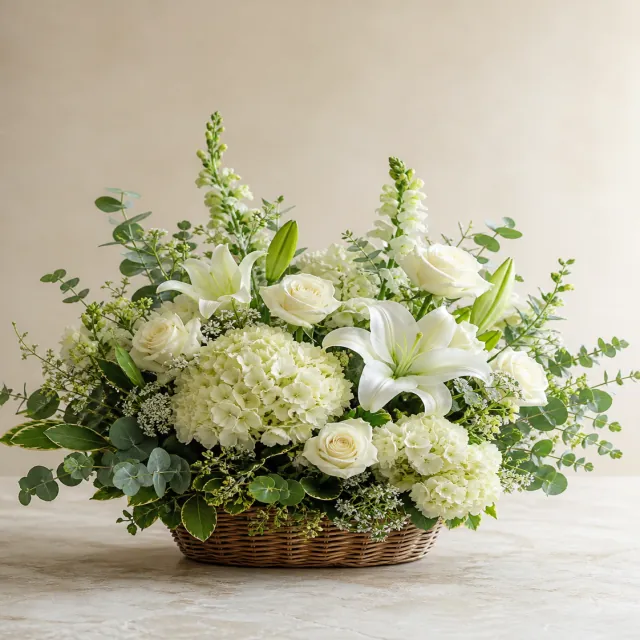
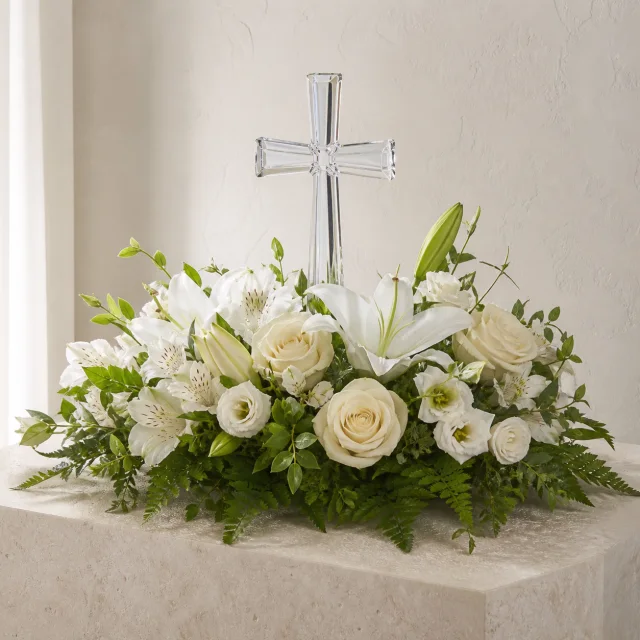
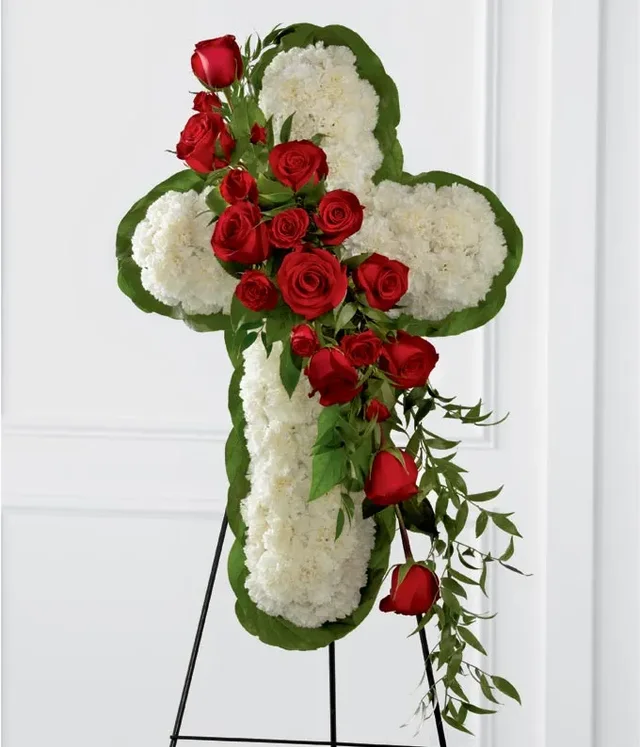
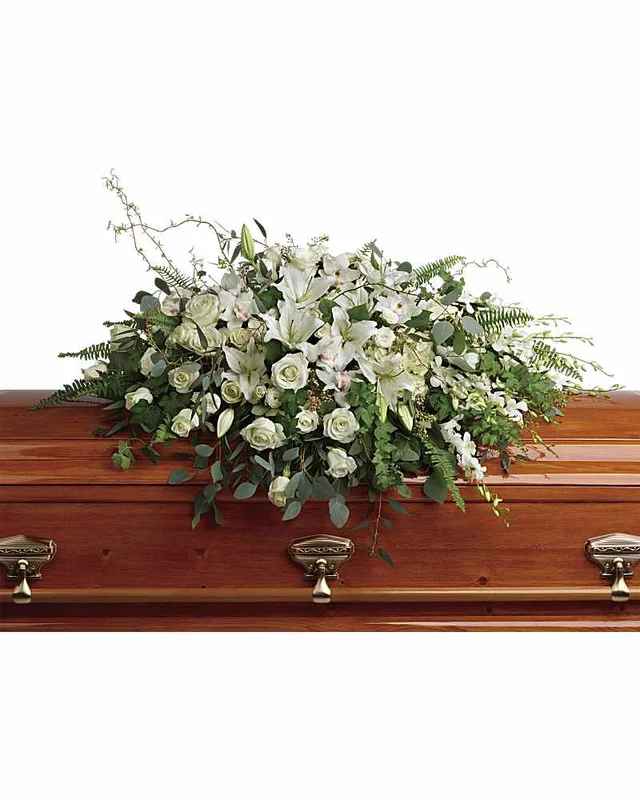
A low vase or basket in an approved area may be easier than a standing spray. Add no cross, saint figure, or other emblem unless requested. Confirm approval before sending flowers for a casket or cremated remains.
Jewish: do not default to flowers
The Rabbinical Assembly's Guide to Jewish Funeral Practice describes flowers as inappropriate to Jewish funerals and directs questions to a rabbi. Reform Judaism's shiva guide says gifts other than food are not customary at a house of mourning and notes donations as an option. These guides serve particular communities, not every Jewish family.
If practice is unknown, do not send a bouquet by assumption. Ask the rabbi, shiva coordinator, or family contact. A named donation, approved kosher food, or condolence card may fit better. If the family welcomes flowers, follow its destination and size instructions.
Muslim: confirm with the mosque, imam, or chaplain
Muslim funeral customs and cemetery policies differ. The Association of Muslim Chaplains says Muslim chaplains support families and advise institutions about religious and cultural accommodations. For a specific service, ask the local imam, mosque contact, chaplain, or cemetery representative.
For example, the Islamic Center of Greater Austin says ornaments, flowers, and candles are not permitted at its graves. That is a local cemetery rule, not a universal rule. Ask whether flowers belong at the mosque, funeral home, home, or grave, or whether the family prefers prayer, a card, help, or a donation.
If approved, choose a modest, non-symbolic design. Do not put anything on a shroud, casket, or grave without permission, and let the mosque or cemetery control placement.
Hindu: ask whether the family wants a garland or another offering
Hindu funeral practice can differ by region, language, sampradaya, family, and the priest or temple leading the rites. The Hindu American Foundation notes that a service may include a flower garland, prayers, and mantras. The Hindu Temple of Delaware says etiquette follows the family and region and asks guests to follow the priest or family member.
Flowers may be a ritual offering without a standing spray being wanted. Ask whether the family needs a garland, loose ritual flowers, altar flowers, or an arrangement for home. Ask the priest or temple about delivery and any requested color, flower, or container. Do not improvise a ritual item or touch service objects without invitation.
At a crematory, temple, funeral home, or home, confirm the receiving point. A small vase or basket may suit a home gift; use a formal service piece only when requested.
Buddhist: identify the school and altar plan
Buddhism includes many schools and local cultures. A funeral may be at a temple, funeral home, or another venue, so one list of 'Buddhist funeral flowers' cannot cover every service.
Dharma Drum Mountain describes a simple altar and lists flowers and fruit as offerings. Salt Lake Buddhist Temple information recognizes floral pieces and flower donations for some services. Other temples may organize flowers differently or request money, incense, food, or other support. Ask the minister, funeral committee, or family whether flowers go on an altar, beside an urn or portrait, to the venue, or home.
When welcomed, a simple vase or basket is easier to place than an elaborate display. Do not assume a color, lotus, Buddha image, incense item, or other symbol fits every school; let the local temple specify.
Choose the product after the destination is clear
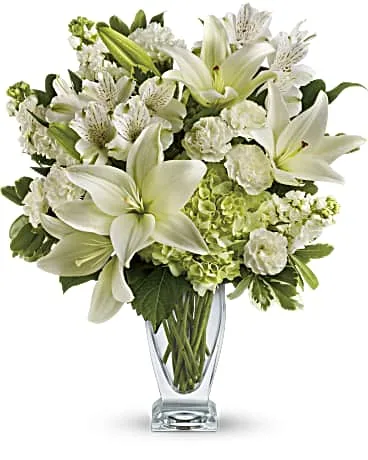
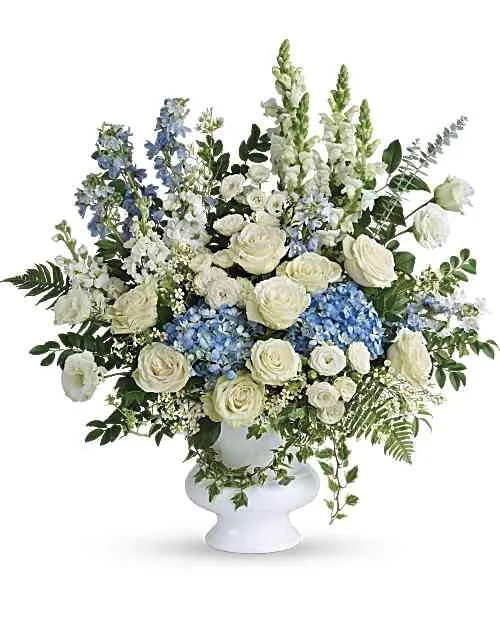
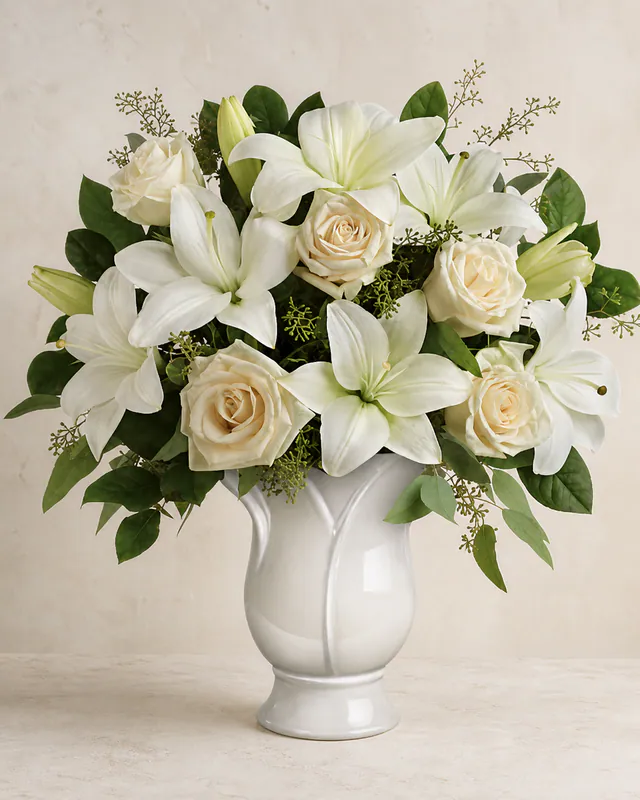
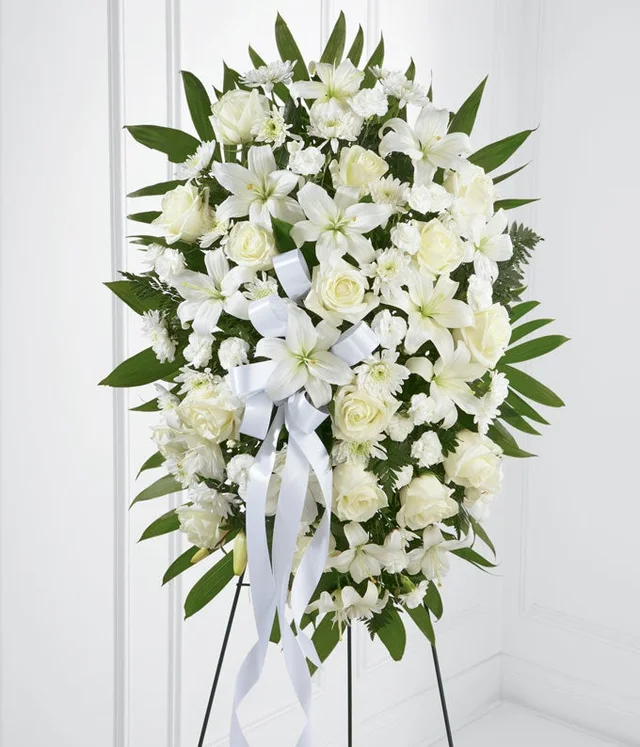
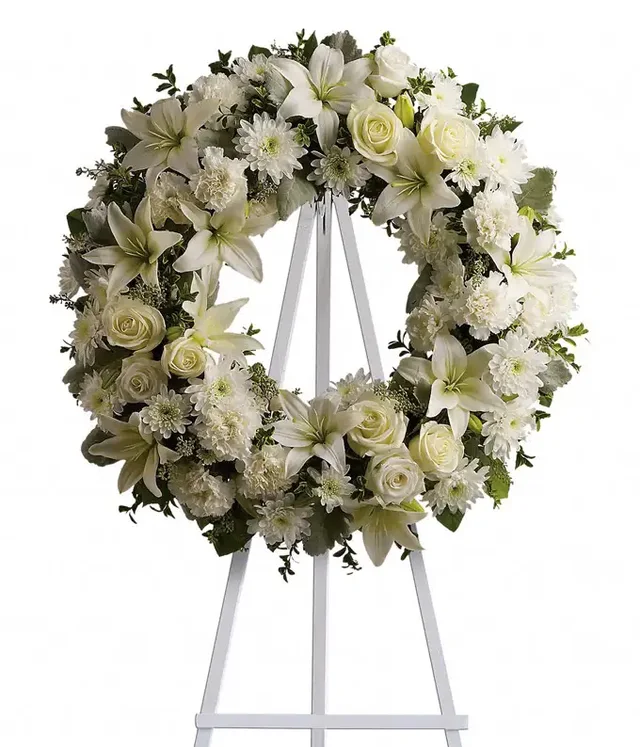
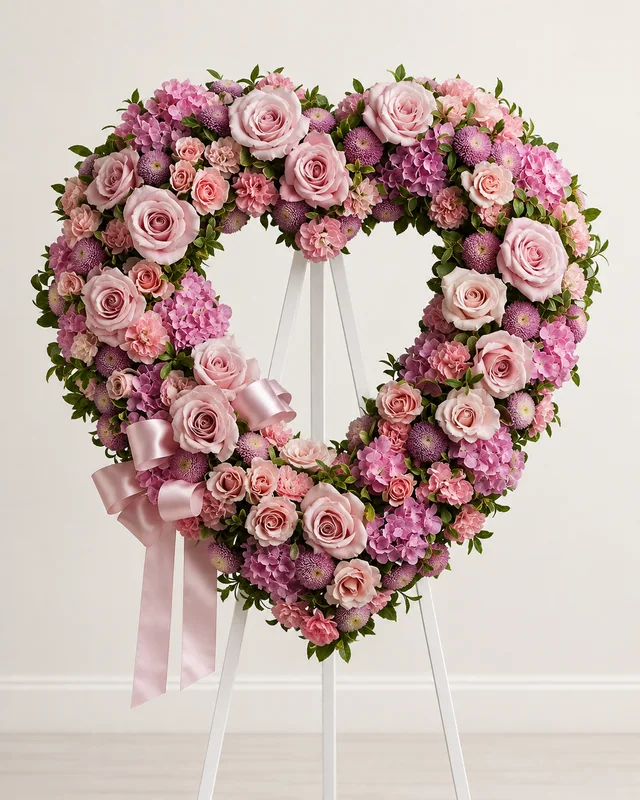
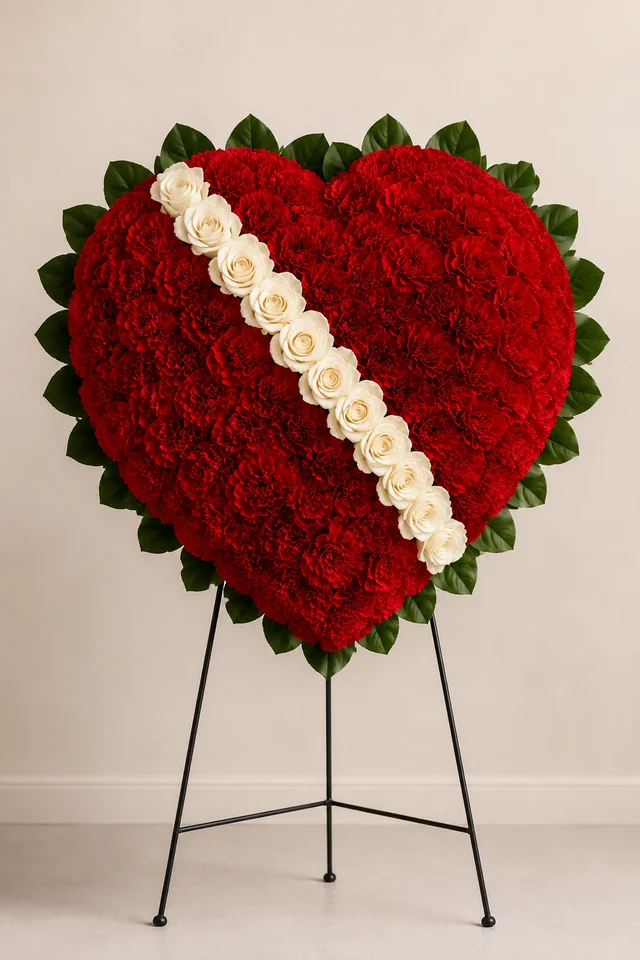
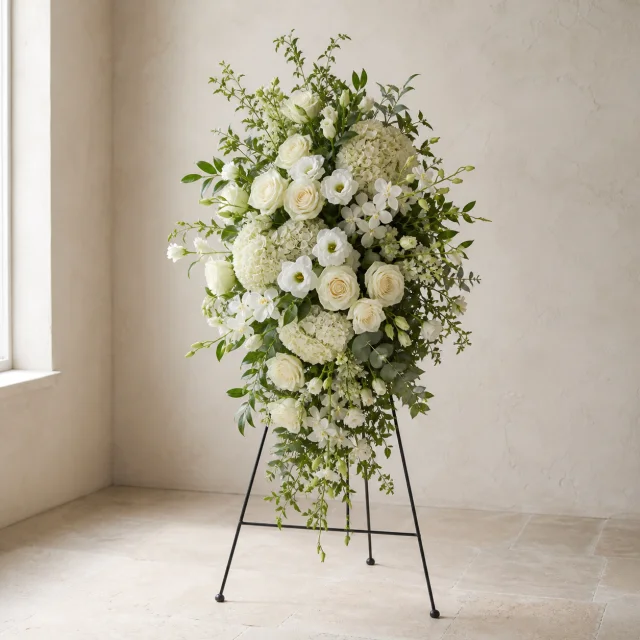
After approval, choose for the physical setting. A low vase suits an approved table; a basket works near an entrance; a standing spray or wreath needs floor space and a stand. A home delivery may be easier when the gathering is private or finished.
Keep the design non-symbolic unless requested. Do not cover an urn, portrait, altar, casket, or memorial object. Ask about size, scent, container, and who will move the flowers. A seasonal substitution should preserve the requested form, not introduce an unapproved symbol or ritual item.
Give the florist complete service details
A florist needs more than a religion. Provide the deceased person's full name, exact venue and street address, branch or room, service date, earliest gathering, and a working phone number. Confirm whether the address is a church, mosque, synagogue, temple, cemetery, funeral home, or private home, and who receives the arrangement.
A general delivery window is not a service-time guarantee. A venue may need flowers before guests arrive or may reject an unattended delivery. Same-day service does not promise arrival before a religious service. If details change, contact the florist; do not assume the venue will forward flowers.
- Family or service planner has approved flowers
- Exact venue, branch, room, or cemetery receiving point
- Deceased person's full name and service date
- Earliest public event and receiving time
- Placement instructions and a reachable contact
- Card sender names and a brief, respectful message
If the family says no flowers
Follow the request. If the notice names a charity, synagogue, mosque, temple, parish, or other organization, use its official donation instructions. If the family asks for food or practical help, confirm dietary needs and a suitable receiving time first.
A card, specific offer of help, or quiet contribution may be more respectful than a replacement arrangement. If you already ordered flowers, contact the florist promptly with the order number. Support the family and service plan rather than forcing a product into a tradition.
Further reading
- United States Conference of Catholic Bishops: Bereavement and Funerals
- United States Conference of Catholic Bishops: General Instruction of the Roman Missal, Chapter V
- Rabbinical Assembly: Guide to Jewish Funeral Practice
- Reform Judaism: Everything You Need to Know About the Jewish Custom of Shiva
- Association of Muslim Chaplains: Islamic Chaplaincy
- Islamic Center of Greater Austin: ICGA Cemetery
- Hindu American Foundation: 5 Things to Know About Hindus and Death
- Hindu Temple of Delaware: Funeral Services Information and Resources
- Dharma Drum Mountain: The Principles for Conducting a Buddhist Funeral
- Salt Lake Buddhist Temple: Funeral Services