Flower buying guide
Birthday Flowers for Someone You Don't Know Well
Choose a birthday flower gift that fits a newer relationship, without inventing the recipient's tastes or making the gesture feel too personal.
By Bloom Lane Flowers · Published
Options to compare
Formats to consider
Consider these formats only if flowers are welcome. Compare the selected size and palette, and confirm any essential ingredients, dimensions or receiving details before ordering.
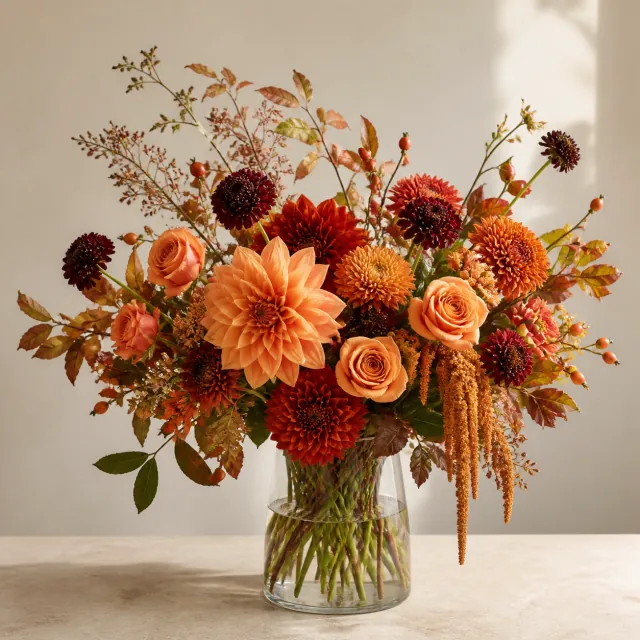
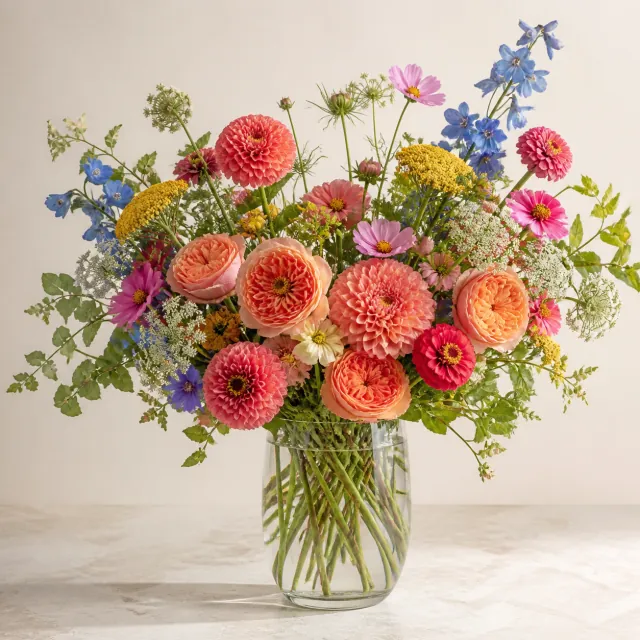
Check the selected product, delivery ZIP and available date before ordering. Availability and timing require confirmation; a requested arrival time or occasion deadline is not guaranteed by an available delivery day.
Choose a modest gesture you can explain honestly, rather than an elaborate arrangement built around a taste you have guessed. For a newer friend, a neighbor you have recently met, or someone connected through family, the useful question is not “Which flower will impress them?” It is “Would flowers feel welcome from me, and what do I actually know about them?”
A birthday is a reason to acknowledge someone, not a requirement to create instant closeness. If a simple card fits the relationship better, that is a complete choice.
Start with the relationship, not the flower
Consider how you learned about the birthday. Someone telling you over lunch gives you a different starting point from discovering a date in a private conversation about them. Do not use a flower delivery to reveal personal information they did not choose to share with you.
Then ask what you want the gift to communicate. “I enjoyed meeting you and remembered your birthday” is enough. You do not need the arrangement to convey affection, admiration, or a promise of a deeper friendship.
For example:
- A neighbor who invited you for coffee: a small birthday gesture can acknowledge a friendly connection without suggesting an ongoing gift exchange.
- Your sibling’s partner, whom you have met twice: a card that names the family connection can make your intention clear.
- A friend from a class or hobby group: private acknowledgment may feel more comfortable than turning a group meeting into a surprise celebration.
These are choices to consider, not rules everyone follows. Where the relationship is especially new, asking whether flowers would be welcome is more useful than trying to read meaning into a particular color.
Use one real preference—or leave room for the designer
A genuine detail is better than a detailed invention. Perhaps the person said they love yellow, pointed out a mixed bouquet they liked, or mentioned that they do not keep flowers at home. Use that information without expanding it into a whole personality profile.
If you know nothing about their tastes, you can choose a mixed arrangement for its form and presentation rather than calling it “their perfect bouquet.” Bloom Lane’s Designer’s Choice is cataloged as a seasonal arrangement whose scale and direction can be selected. Its palette is a preference, not a promise of a particular flower recipe.
Gathered Garden is described as mixed garden flowers in a clear glass vase. That makes it a format to consider when you want the gift to arrive with a vessel rather than expecting the recipient to supply one. Neither choice tells you whether that person wants flowers; settle that question first.
Avoid describing a palette as universally romantic, friendly, masculine, or feminine. If you prefer a color, say so. You do not need unsupported flower symbolism to justify the decision.
Calibrate the scale without guessing their room
You can choose a restrained gesture without pretending to know the dimensions of the recipient’s home. Compare the selected product option and ask about its actual footprint if size matters. Labels such as “Classic” or “Petite” are not measurements.
Think about the emotional scale, too. Would the recipient understand why you sent this gift? Would a large display make the occasion feel more intimate than you intend? The larger option is not automatically the more thoughtful one.
If you cannot comfortably ask for a delivery address, do not obtain one through someone else merely to preserve the surprise. Offer to give the flowers when you next meet, ask where they would prefer to receive them, or choose a card instead.
Keep the note specific and proportionate
A useful note identifies you, names the occasion, and includes one real connection. It does not need a declaration of how well you know the person. The names in these sample messages are illustrative; replace them with your own details.
For a newer neighbor
Happy birthday, Maya! I enjoyed our coffee on the stoop last week. Wishing you a lovely day. —Your name, next door
For a relative’s partner
Happy birthday, Eli. It was great meeting you at Sam’s dinner. A little birthday greeting from our side of the family. —Nora
For someone in a shared class
Happy birthday, June! I’ve really enjoyed our Wednesday pottery conversations. Hope you get some time today for something you love. —Alex
Leave out jokes that rely on intimacy you have not established. “You don’t look your age” and “I know what you really need” ask the recipient to accept assumptions along with the gift.
A good stopping point
Once you have a welcome gesture, an appropriate scale, and an honest note, stop optimizing. You do not need to investigate favorite flowers through several acquaintances or explain every design choice.
The next step is simple: confirm that flowers are welcome, choose a product format you understand, and keep the message true to the relationship as it exists today.