Flower buying guide
Flowers for a Fragrance-Sensitive Household: What to Ask Before Buying
Put household preferences first, ask about the actual flowers and foliage, and know when not to send flowers.
By Bloom Lane Flowers · Published
Options to compare
Formats to consider
These are style references only, not fragrance classifications. Do not order unless the household welcomes flowers and the relevant ingredient questions are resolved.
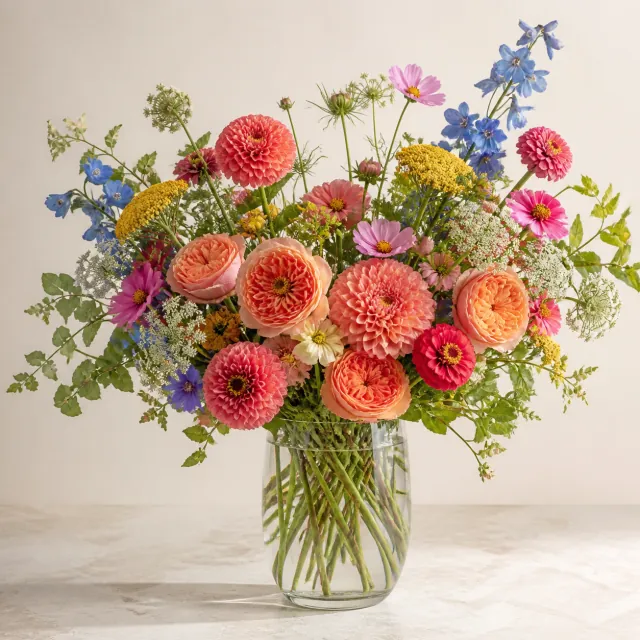
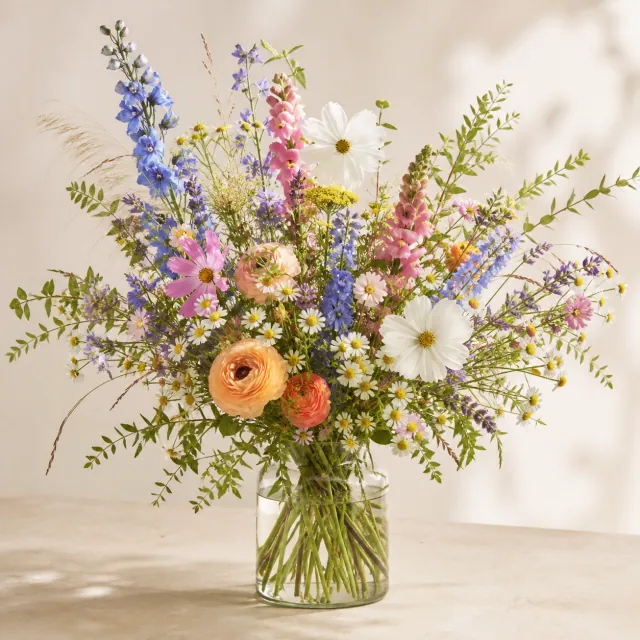
Check the selected product, delivery ZIP and available date before ordering. Availability and timing require confirmation; a requested arrival time or occasion deadline is not guaranteed by an available delivery day.
Ask whether flowers are welcome before choosing an arrangement. If someone has told you their household avoids floral fragrance, a beautiful product photo is not a reason to override that boundary. When the recipient’s preference or the arrangement’s ingredients cannot be established, the considerate fallback is not to send flowers.
This is a gift-selection conversation, not a way to assess a medical condition. You do not need someone to explain symptoms or defend a preference. You need to understand what they want in their home and whether the florist can supply enough information for them to decide.
Begin with permission, not a proposed workaround
A useful first question is direct and easy to decline:
“I’d like to send you something to celebrate. Would flowers be welcome in your home, or would you prefer a note and a different gift?”
Avoid asking, “Would flowers be okay if I found ones with almost no smell?” That makes the recipient negotiate against a purchase you already want to make. It also treats a broad fragrance description as an answer to a personal question.
If they welcome flowers with limits, let them state those limits. They may name ingredients they do not want, prefer to approve a proposed mix, or simply say flowers are not a good choice for the shared space. A household includes more than the person on the card; do not assume that person’s enthusiasm answers everyone else’s preferences.
You can ask about shared-space suitability without asking for private health information: “Is there anyone else at home whose preferences we should account for?” Accept a no without requesting a diagnosis or suggesting that another room would solve the issue.
Turn the preference into a specific florist question
“Not too fragrant” can mean different things to different people. If the recipient has named flowers or foliage to exclude, use those names rather than substituting your own list of supposedly suitable stems.
A request might read:
“The recipient welcomes flowers only after reviewing the proposed ingredients. Can you identify the flowers and foliage for this arrangement, confirm whether their named exclusions can be honored, and explain what happens if substitutions become necessary?”
Ask about foliage as well as blooms. A bouquet is a combination of materials, and a flower-focused description may not identify everything in it. If the florist cannot name the actual mix before preparation, that is a limitation to take back to the recipient, not permission to guess.
Keep three answers separate:
- A description of a style: mixed garden, airy meadow, soft palette.
- An ingredient confirmation: the flowers and foliage proposed for this particular order.
- The recipient’s decision: whether that information is sufficient for them to welcome the gift.
Only the last answer tells you whether to proceed. Even a confirmed ingredient list is not a medical assurance or a promise of no detectable fragrance.
What the catalog can—and cannot—tell you
Gathered Garden is described in the catalog as a mixed garden arrangement in a clear glass vase. Wildflower Arrangement is described as an airy meadow-style mix. Those are presentation choices, not fragrance classifications.
Consider either only if the household welcomes flowers and the relevant ingredient questions have been resolved. A mixed arrangement’s name, color, or photograph cannot establish that it meets a specific exclusion request. Do not order first and rely on a free-text note to turn an unanswered question into a confirmed commitment.
Nor should you substitute a plant automatically. That is a different gift with its own ingredients, placement, and care considerations. Ask what the recipient would like instead.
Keep approval meaningful when details change
Suppose your friend approves a proposed mix after reviewing it. If a material later needs to change, the original approval should not be treated as approval for any replacement. Before buying, ask whether changes can be brought back for confirmation. If that process is not possible, choose a different gift rather than asking the florist to make a suitability judgment on the household’s behalf.
This need not become an elaborate exchange. One clear preference, one clear ingredient response, and one clear decision may be enough. The important point is that uncertainty remains visible rather than disappearing inside phrases such as “gentle scent” or “usually fine.”
A thoughtful gift can be something else
A personal letter, a recipient-chosen treat, or an agreed outing can carry the same congratulations or affection without bringing unapproved flowers into a shared home. Check any alternative’s preferences separately; do not attach a scented candle simply because it is not floral.
Your note can make the decision feel considered rather than apologetic:
“I wanted the gift to fit your home, so I chose a handwritten note instead. I’m delighted for you, and I’d love to celebrate in whatever way you enjoy.”
Respecting the boundary is part of the gift. You do not need to find a floral exception to prove you care.