Flower buying guide
Get-Well Flowers for Home Recovery: A Gift, Not Another Task
Choose a welcomed home-recovery gift with manageable setup, considerate wording and no pressure to host or reply.
By Bloom Lane Flowers · Published
Options to compare
Formats to consider
Consider flowers only if welcome and someone can manage care. The plant collection is not an easier default and requires explicit interest in several living plants.
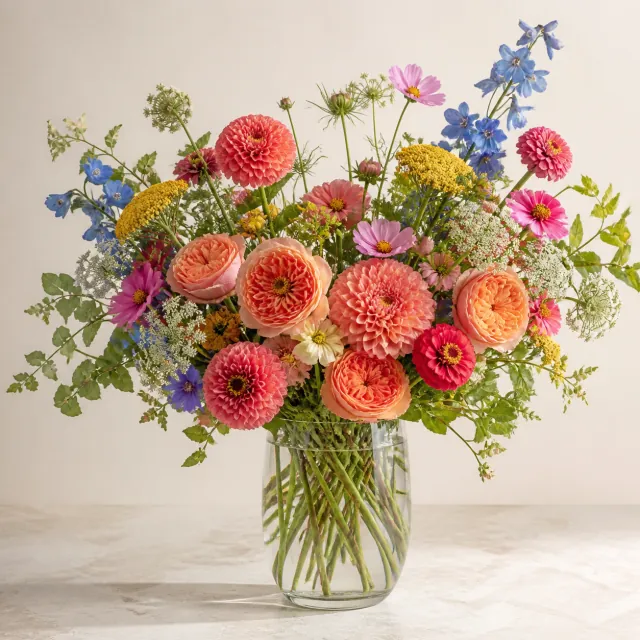
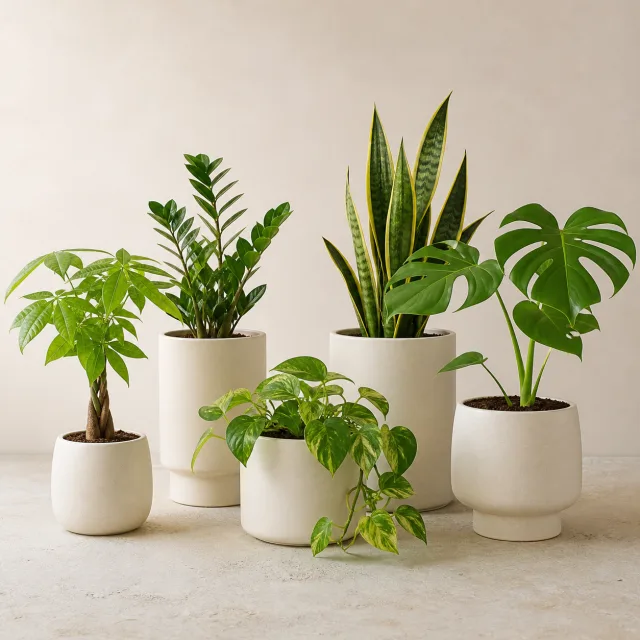
Check the selected product, delivery ZIP and available date before ordering. Availability and timing require confirmation; a requested arrival time or occasion deadline is not guaranteed by an available delivery day.
For someone recovering at home, choose flowers only if they want them and the household can comfortably handle their setup and care. A gift should not require the recipient to find a vase, clear a crowded table, entertain a visitor or reassure the sender.
Flowers can be a personal expression of support. They are not a treatment, and this is not advice about whether flowers are appropriate for a medical condition. If the person has individual restrictions or concerns, follow their wishes and the guidance they have received rather than substituting a gift recommendation.
Ask permission without asking for a health report
You can make a considerate offer without requesting details of an illness or procedure:
“Would you enjoy flowers at home this week, or would you rather I skip the gift? Either is completely fine.”
If they would like flowers, a second practical question may be enough:
“Would a vase arrangement be helpful, and is there someone who can handle the water?”
Do not ask a family member to disclose private medical information to help you choose. If the recipient cannot reply, an appropriate household contact may be able to say whether a gift is welcome without explaining why.
A delayed reply is not permission. If you cannot establish that the gift would be wanted, a short message of support can stand on its own.
The gift includes the work it creates
Consider the tasks between receiving flowers and enjoying them. A wrapped bouquet requires a container and setup. A vase arrangement reduces the need to find a vase but still needs attention. Even a gift presented as ready to display is not care-free.
Bloom Lane’s Gathered Garden is described in the catalog as a mixed garden arrangement in a clear glass vase. It is a format to consider when the recipient welcomes cut flowers and someone can manage their care. Confirm the chosen arrangement’s actual dimensions and ingredients if those details affect the household’s decision.
Do not infer that an arrangement is fragrance-free, safe around every pet or suitable for a particular health situation from its product name or picture. Ask about the exact flowers where relevant, and let the recipient decide whether the proposed gift fits.
The best scale is the one that fits the agreed space and workload. A bigger gift does not automatically convey more support.
Who will take care of it?
You do not need to give a recovering person a flower-care lecture. You do need to avoid pretending the work disappears.
Iowa State University Extension recommends checking cut-flower water daily, adding water as needed and changing it when cloudy or unpleasant-smelling. It also advises following the directions on commercial floral preservative. Those are practical reasons to ask who will handle the gift, not reasons to place another daily duty on the recipient.
If a household member has volunteered, you can keep your offer specific: “If flowers sound good, I can coordinate the gift with Alex so you don’t have to deal with setup.”
Do not assign that job to someone who has not agreed to it. A partner or relative may already be managing a full workload.
A plant is not automatically the easier choice
A living plant can be welcome when the recipient enjoys keeping plants and explicitly wants another one. It can also introduce an ongoing responsibility at exactly the wrong moment.
The Green Plant Collection is described in the catalog as multiple indoor plants in matching ceramic vessels. Consider it only for someone who wants a collection, has room for several plants and has agreed to the longer-term commitment. It is not a default replacement for cut flowers simply because it lasts beyond the occasion.
Avoid guessing watering routines or household suitability from “easy-care” language. Plant identity, conditions and the recipient’s preferences still matter. If a collection sounds like too much, leave it out of the options.
Write a note that asks for nothing
Keep the message warm and free of recovery deadlines:
“Thinking of you. I hope these are a welcome bit of color at home. No need to reply.”
For a closer friend:
“I’m here for you, and there’s no hosting required. I’ll check in by message next week unless you’d prefer some quiet.”
Avoid “You’ll be back to normal in no time,” questions about progress, or instructions to stay positive. You cannot know someone’s timetable or how they feel.
Keep separate offers of help genuinely optional. “I can leave dinner on Tuesday if that would help” is clearer than “Let me know if you need anything,” but even a specific offer should leave room for no.
Flowers are the right choice when the person wants them and the work is manageable. If either answer is uncertain, a thoughtful message or another requested form of support may be the more considerate gift.