A simple place to start
An aunt or uncle can be a second parent, a favorite companion, someone you saw once a year, or a person you were just getting to know. Your card does not need to claim a closeness you did not have. Choose an example that fits and change the details to your own.
Are you writing to your aunt or uncle, or to the family?
For flowers displayed at a funeral, you might write directly to the person being remembered: “Uncle David, I will miss our Sunday phone calls.” You can also write to the family: “Remembering David and sending love to everyone who misses him.” Neither requires you to explain the whole relationship.
For flowers sent to a cousin, spouse, or another relative at home, name the recipient and offer your sympathy to them. A card that starts “Dear Sofia” makes clear who the gift is for. Keep service-identification details in the order, separately from the personal card.
Funeral flower messages for an aunt
Use “Aunt,” her first name, or the familiar name you called her. Only keep a memory in these examples if it is true for you.
- Aunt [Name], thank you for all the ways you showed up for me. With love, [Name].
- I will miss your stories, your laugh, and the time we had together. Your niece, [Name].
- Aunt [Name], you made room for me in your life, and I will always be grateful. Love, [Name].
- Remembering the afternoons in your kitchen and the kindness you gave so freely. With love, [Name].
- You were my aunt and my friend. I will miss you dearly. [Name].
- With love for Aunt [Name] and gratitude for the memories we share. [Names].
Funeral flower messages for an uncle
A small, recognizable detail can make a card personal without making it long.
“Niece” and “nephew” are optional signatures, not rules. Use the relationship or name that feels right to you, including when the person was an aunt or uncle by marriage or a close family friend.
- Uncle [Name], thank you for your patience and your kindness. With love, [Name].
- I will miss our conversations and the way you always made time for me. Your nephew, [Name].
- Remembering the walks, the stories, and every lesson you shared. Love, [Name].
- Uncle [Name], you made ordinary days memorable. I am grateful I knew you. [Name].
- With affection for a much-loved uncle. You will be deeply missed. [Names].
- Thank you for being part of so many good memories. With love, [Name].
Short messages when you cannot find many words
A brief message can carry your love without trying to make sense of the loss.
Religious language is optional. Use a phrase such as “May you rest in God's peace” only when it fits the family's beliefs and wishes. You do not need to add a verse or a religious symbol to make the card respectful.
- In loving memory of Aunt [Name]. [Your name].
- With love and lasting gratitude. [Your name].
- Remembering Uncle [Name] with affection. [Your name].
- Thank you for the memories. Love, [Your name].
- Loved and remembered by your nieces and nephews, [Names].
Signing flowers from several nieces, nephews, or households
Agree on one message and one person to approve the spelling before ordering. Include the names the family will recognize. For example:
Aunt Rosa, we will remember your warmth and the welcome you gave each of us. With love from your nieces and nephews, Alex, Priya, Sam, and Jo.
For several households, a signature such as “With love, the Patel cousins and our families” can work when that accurately describes the senders. Do not add someone to a shared gift without asking, or use a family surname that leaves a contributor unclear. If names will not fit, ask the florist what the card can accommodate; there is no universal character limit.
If your relationship was more distant, you can be honest and gentle: “Remembering Aunt [Name] and thinking of everyone who loved her. With sympathy, [Full name].” A flower card is not the place to explain disagreements or introduce private family history.
Words for a cousin or another surviving relative
These messages address the person receiving support rather than the aunt or uncle who died:
Offer help only if you can follow through. A private message is a better place for a practical offer than a card that visitors may read at the service.
- Dear [Name], I am so sorry about your mum. I will remember Aunt [Name]'s kindness. With love, [Your name].
- Thinking of you as you remember your dad. Uncle [Name] meant a great deal to me too. [Your name].
- With sympathy as you remember your aunt. Sending love to you and your family. [Full name].
- I am remembering [Name] and thinking of you this week. With love, [Your name].
A ribbon is different from the card
If the selected tribute can have a lettered ribbon, keep it brief: “Beloved Aunt,” “Beloved Uncle,” or “Always Remembered.” Put the personal memory and sender names on the card.
Ribbon lettering is not automatically included. Confirm whether it is available for the arrangement, what will fit, the preparation time, and any additional charge. An order note alone does not confirm a ribbon request. A clearly signed card still carries your message if lettering is unavailable.
Choose flowers for where your message will go
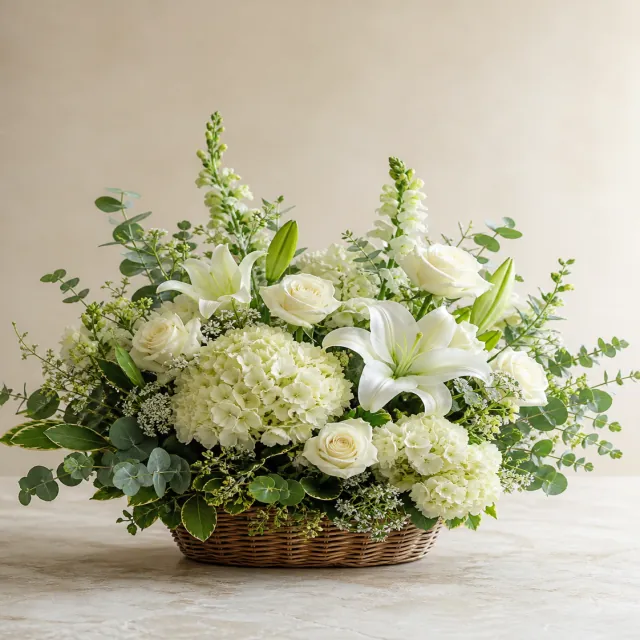
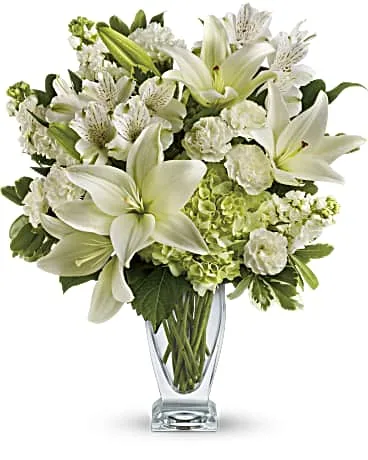
If flowers are welcome at the service, compare Serenity Basket with Serene Bouquet. Serenity Basket has different scales, including a substantial Service option; Serene Bouquet is arranged in a clear glass vase. Ask about the space available before choosing. Being a niece or nephew does not mean you need to order a casket spray—coordinate that with the people arranging the funeral.
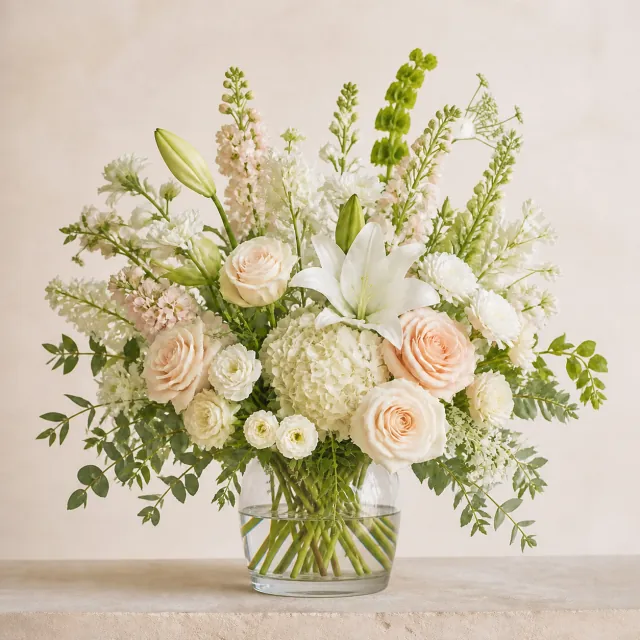
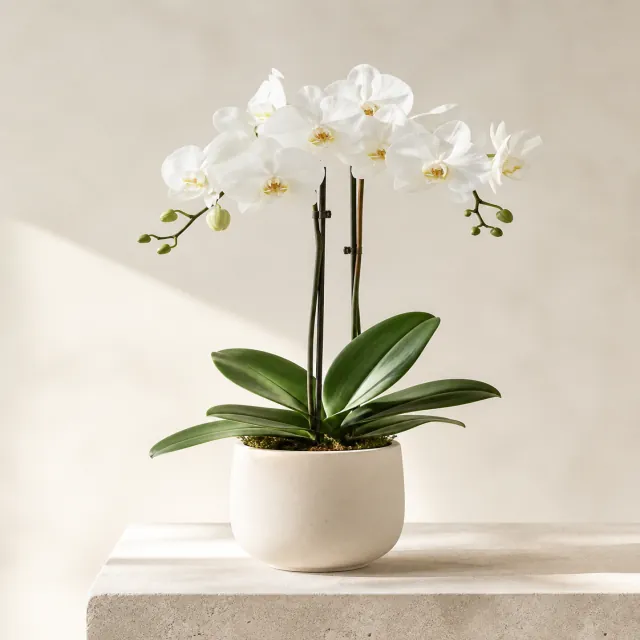
For a welcomed gift to someone at home, compare Gentle Embrace with Signature Orchid. Choose for the recipient's space and preferences, and only send a living plant if its care would be welcome. Confirm household restrictions before ordering; the recommended products are not represented here as allergy-safe or pet-safe.
If the family asks for donations instead of flowers, follow that request. You can send the same thoughtful words in a card without buying an arrangement.
For a service: confirm the venue, receiving window, full name on the notice, and available delivery date before ordering. For a home gift: use the recipient's confirmed residential address, not the funeral-home destination. Product and florist availability vary; a delivery option does not guarantee arrival before a service.