Funeral flower buying guide
Funeral Flower Card Messages: Short Examples by Relationship
Short funeral flower card messages to copy for family, friends, coworkers and groups, with signing tips, wording to avoid, and how to write your own.
By Bloom Lane Flowers · Published · Updated
If a home gift is welcome
Follow the family's wishes and confirm the private address; a card need not accompany flowers.
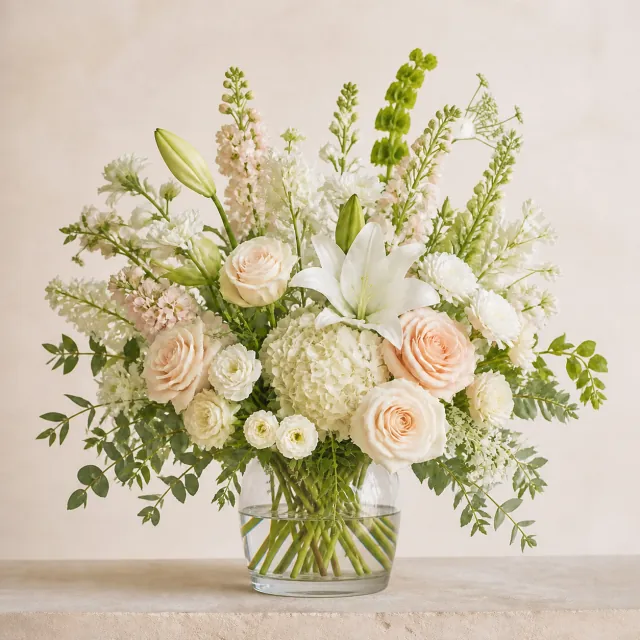
Flowers for the family home: Choose a design that suits the household. Confirm the delivery address and any needs, such as allergies, before ordering. Compare this group.
Check the selected product, delivery ZIP and available date before ordering. Availability and timing require confirmation; arrival before a service is not guaranteed by an available delivery day.
Jump to a section 10 sections
Funeral flower card messages work best when they are short, sincere, and clear about who sent the flowers. Write one or two sentences that honor the person, offer care to the family, and sign your name or your group’s name. The examples below are starting points: replace the bracketed parts and keep only the words that sound like you.
Writing to your own mother or father? See our short funeral card messages for Mom or Dad.
Funeral flower card messages examples to personalize
Each line is a sample to adapt, not required wording. Use the name the family shows on the service notice, and check the spelling of every name before you order.
Example for a wife or husband
- To my wife, with all my love. Always yours, [Your name].
More messages for a wife or husband
Examples for a parent, child, or relative
- In loving memory of our mother, [Name]. Your kindness will stay with us always. [Your names]
- With love as we remember [Name]. You will always be part of our family’s story. [Your names]
Examples for a brother or sister
- In loving memory of my dear sister, [Name]. Thank you for every year we shared. [Your name]
- Remembering my brother, [Name], with love and gratitude. [Your name]
Examples for a close friend
- Remembering [Name] with love. I am holding you and your family close in my thoughts. [Your full name]
- I am wishing you and your family love and support at this time. All my love, [Your name]
Examples for a coworker, neighbor, or group
- With deepest sympathy from everyone at [Company or Team]. We are thinking of you and your family.
- We are so sorry for your loss. [Name] will be remembered with warmth by neighbors and friends. [Household name]
- With sympathy from the [Team] at [Company]. Please let us know if we can help. [Team name]
Short lines when you are unsure what to say
- With deepest sympathy. [Your name]
- I am so sorry for your loss. [Your name]
- Thinking of you and your family. [Your name]
- Remembering [Name] with love. [Your name]
For a coworker, neighbor, or acquaintance, keep the message general and warm. For a close relative or friend, one true detail can make the note more personal.
Messages by relationship
For more examples written for one relationship, or for ribbons and thank-you notes, use these guides:
- What to write on funeral flowers for a husband or wife
- What to write on funeral flowers for mom or dad
- What to write on funeral flowers for grandma or grandpa
- What to write on funeral flowers for a sister or brother
- Sympathy messages for someone who lost a parent
- Funeral flower ribbon messages
- Thank-you notes for funeral flowers
- Funeral flowers by relationship
How to write your own in three parts
Start with the name, add one true detail, and finish with a line of care. Then sign it.
For example: “[Name] always made the coffee on our street before anyone else was awake. We are thinking of you all. [Your name]”
Use a detail you can stand behind. A small, specific memory says more than a long tribute, and it does not have to be dramatic. If you cannot think of one, a line of care is enough.
Read the finished message aloud once. If it sounds like something you would say to the family in person, it is ready. If a sentence feels borrowed or overly formal, cut it; the simplest version is often the most sincere.
Signing the card: individuals and groups
Sign with your full name when the family may not know you well, or when your relationship is not obvious. The AARP condolence guide’s sample note closes with “All my love,” followed by the sender’s name.
If you are writing to a family you know only slightly, a full name is clearer than a first name alone, because the family may not recognize every sender.
When several people send one arrangement, the card can name the group. Emily Post’s guidance notes that when a card lists many names, the senders can be identified as a group, and that a card can be signed by the individuals who contributed. For example: “With love from the [Family name] family” or “From the [Team] at [Company].”
Ribbon and card: different jobs
A ribbon carries a few lettered words across a formal piece, such as a standing spray or wreath, where people can read it from across the room. The card carries your full message and your names. Keep ribbon wording to a few words, such as “Beloved Mother” or “Our Friend,” and let the card hold the rest.
Ask the florist whether a ribbon is available for your arrangement and how many words will fit.
If the family welcomes a formal service tribute, compare Standing Spray and Remembrance Wreath, then confirm lettering for the chosen design before paying.
Faith and comfort wording
Use religious words only when you know they fit the family’s faith. A warm, neutral message is respectful when you are not sure. Do not add a title, honor, or organization name unless it is correct.
What to leave out
The AARP guide lists several phrases to avoid, including “He’s in a better place now,” “At least it’s over now,” “You’re the head of the family now,” and “It was God’s will.” Leave these out, even when they seem kind.
Keep advice about grief, the cause of death, money or estate matters, and old family disagreements off the card. Jokes are best left out unless you know the family would welcome one.
Ordering with your message
When you order, give the florist the deceased person’s full name as it appears on the service notice, the venue name and address, the first viewing or service time, your card message, and every sender name. Check the card once more before you pay. If the family has asked for donations instead of flowers, follow that request.
For a welcomed home gift instead, Gentle Embrace can carry a card addressed to the living recipient. Confirm their address privately rather than keeping the service venue selected.
Free delivery is included on every order; applicable tax is extra.
If you are unsure whether flowers are the right gift, read our sympathy flowers for a friend at home guide.
Questions about funeral flower card messages
How long should a funeral flower card message be?
One to three sentences is enough for most cards. A short, sincere note is complete, and a longer, more private message can go in a letter.
Should I sign my full name on the card?
Yes, when the family may not know you or when the relationship is not obvious. The sender’s name tells the family who the flowers are from. For a group, sign with the group’s name.
What if I do not know what to write at all?
Use a short line such as “I am so sorry for your loss,” followed by your name. Add one true memory if you have one.
Further reading
Compare the flowers in this guide
Flowers for the service
Confirm the family's wishes and the venue's placement rules before ordering. Lettering and dimensions vary by design, so check with the florist.

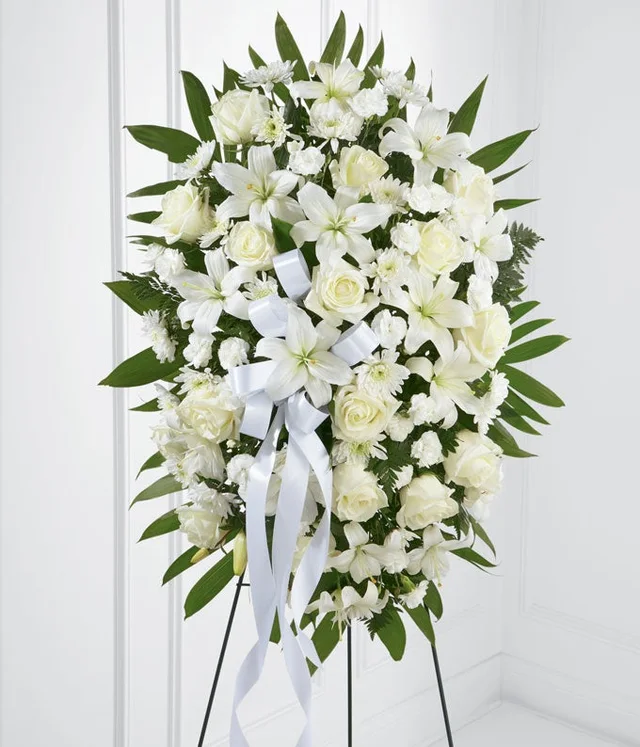
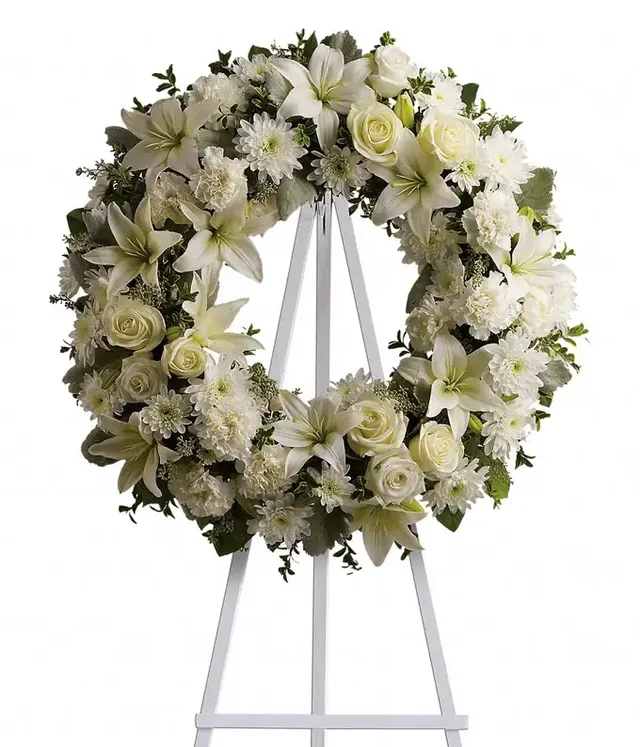
Flowers for the family home
Choose a design that suits the household. Confirm the delivery address and any needs, such as allergies, before ordering.
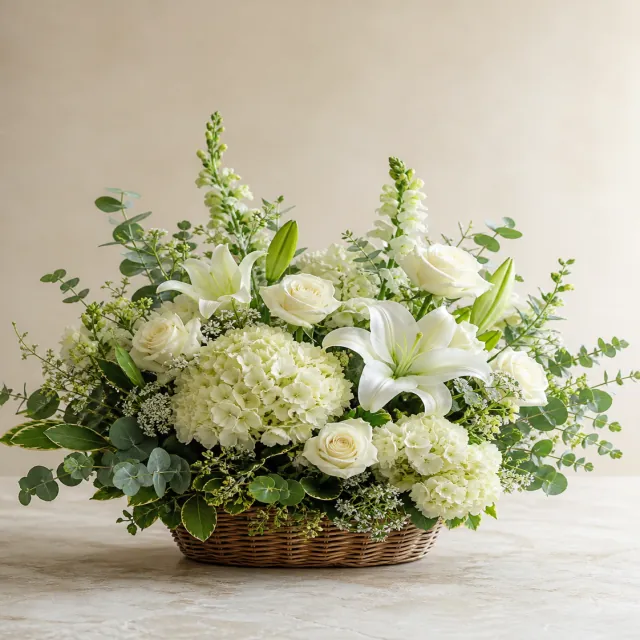
Check the selected product, delivery ZIP and available date before ordering. Availability and timing require confirmation; arrival before a service is not guaranteed by an available delivery day.
For service flowers, confirm the exact funeral-home destination and receiving window, then add your message at checkout. A gift for someone at home needs a separate, privately confirmed address. Free delivery is included; applicable tax is extra.