Start with the name you called them
Mom, Mum, Mama, Ma, Dad, Daddy, Pop, Papa: the name you used is usually the right first word. You can write straight to your parent, as if leaving a note on the counter, or write a line of remembrance about them. Both are correct, and neither needs to be long.
Cards on displayed flowers can be read by relatives and guests, and many funeral homes gather them for the family after the service. Write what you are comfortable sharing in that room. Longer, private words can go in a letter instead. Some families place letters with their parent before the service; the funeral director can tell you what is possible.
What to write on funeral flowers for your mom
Change any detail to one of your own. A true, specific memory is what makes a short card sound like it could only have come from you.
- Mom, thank you for every packed lunch and every late-night phone call. I love you. [Your name]
- You were my first home, Mama. I carry you with me. [Your name]
- I still reach for the phone to tell you things. I love you, Mom. [Your name]
- Mom, you showed me how to stand up for people. I’ll keep doing it. Love, [Your name]
- Rest easy, Mum. You did a wonderful job with us. [Your name]
- Your laugh is the sound I will miss most. Love you forever, [Your name]
What to write on funeral flowers for your dad
Many people find it easier to thank a father than to say goodbye to one, and gratitude is a good place to start. Use Dad, Pop, or whatever you called him.
- Dad, thank you for every early drive to practice and every ride home. I love you. [Your name]
- You fixed everything, Dad, except how much we would miss you. [Your name]
- Thank you for every piece of advice I ignored and later used. Love, [Your name]
- Dad, I hope I make you proud. I’ll keep trying. [Your name]
- Pop, the garage will never be the same. Love you. [Your name]
- Dad, I can still hear you whistling in the kitchen. Love you always. [Your name]
Funeral flower messages from all the children
Siblings often send one arrangement together, particularly for the family’s main piece near the casket. Choose one person to place the order, agree on the wording before anyone pays, and decide how names will appear: oldest to youngest, alphabetical, or by household.
“Your children, Anna, Mark, and Joe” is clear. If spouses are included, keep couples together: “Anna and Tom, Mark, Joe and Priya.” A sibling who wants to say something more personal can add a separate card or send a small arrangement of their own.
If one sibling cannot contribute to the cost, include their name anyway when everyone agrees. The card speaks for the family, not for how the bill was divided.
- To the best mother five kids could ask for. We love you. [Names]
- Dad, we will look after Mom and each other, just like you taught us. [Names]
- Thank you for giving us each other. Love, your children, [Names]
- You made every one of us feel like the favorite. We love you, Mom. [Names]
For a stepparent, mother-in-law, or father-in-law
Stepchildren and children-in-law sometimes wonder whether it is their place to send flowers or to sign the children’s card. Ask the person organizing the family’s flowers, then write in your own voice. Sign with your full name if some relatives may not know you well.
Use the name you actually used. If you called your stepfather by his first name, write that. If you called your mother-in-law “Mom,” you can write that too.
- You chose to love me, and you never stopped. Thank you. [Your name]
- You didn’t have to be my dad, and you were anyway. Love, [Your name]
- Thank you for welcoming me into this family from the very first dinner. With love, [Your name]
- [Name], you raised the person I love most. I will always be grateful. [Your name]
- Remembering my father-in-law with respect and real affection. [Your full name]
When the relationship was complicated
Not every parent was easy to love, and a funeral card does not have to pretend otherwise. You can send flowers with only your name, write a few quiet words, or decide not to send flowers at all. Heart to Heart Hospice describes complex, contradictory feelings after the death of someone from a difficult relationship as normal.
If you do write, choose words that are true for you. Other relatives will see the card, so the funeral is not the place to settle anything. Honest and brief is enough.
If you were estranged, you do not have to join a shared card. A separate card, or none, is fine. You can ask a sibling to add your name only if you want it there.
- Remembering you today, Dad. [Your name]
- Thinking of the good days, Mom. [Your name]
- I hope you are at peace. [Your name]
- With respect and remembrance, [Your full name]
Ribbon wording for Mom or Dad, and how it differs from the card
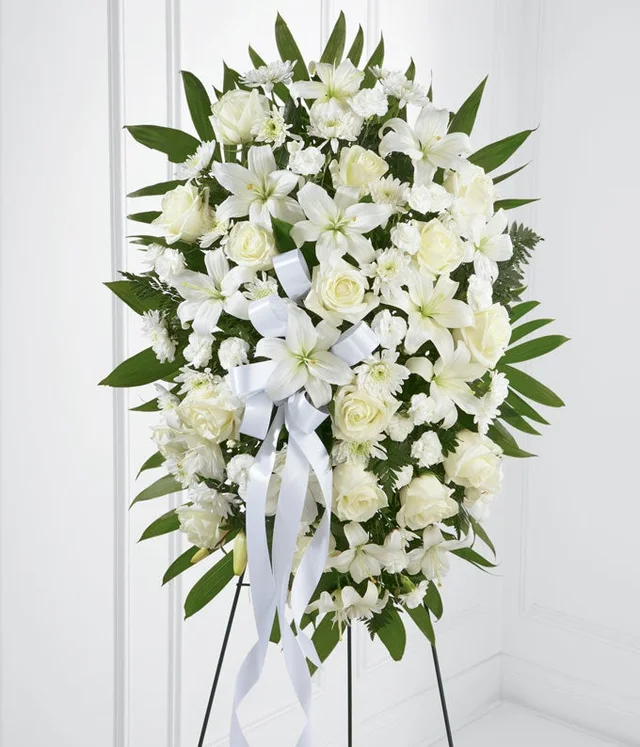
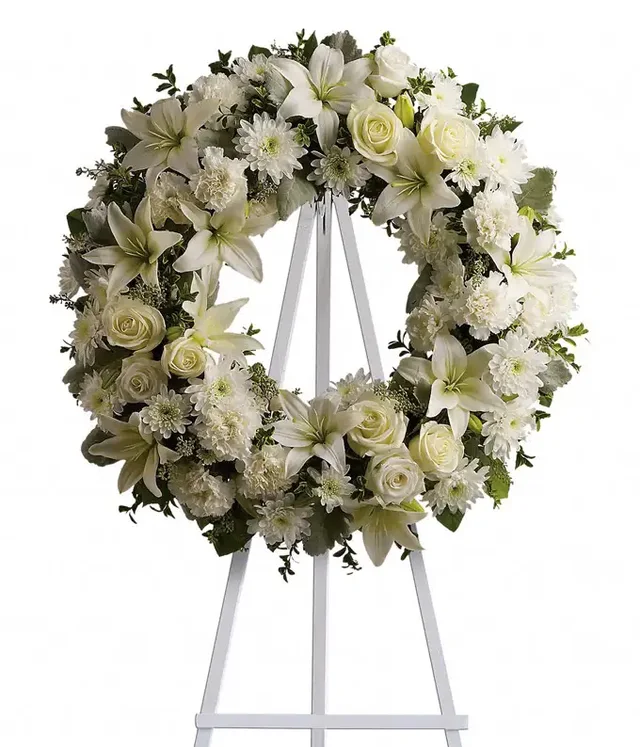
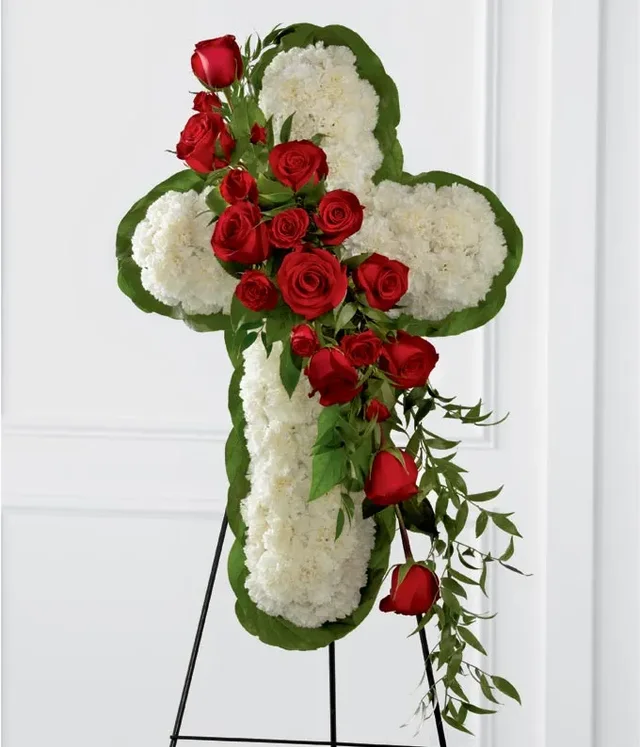
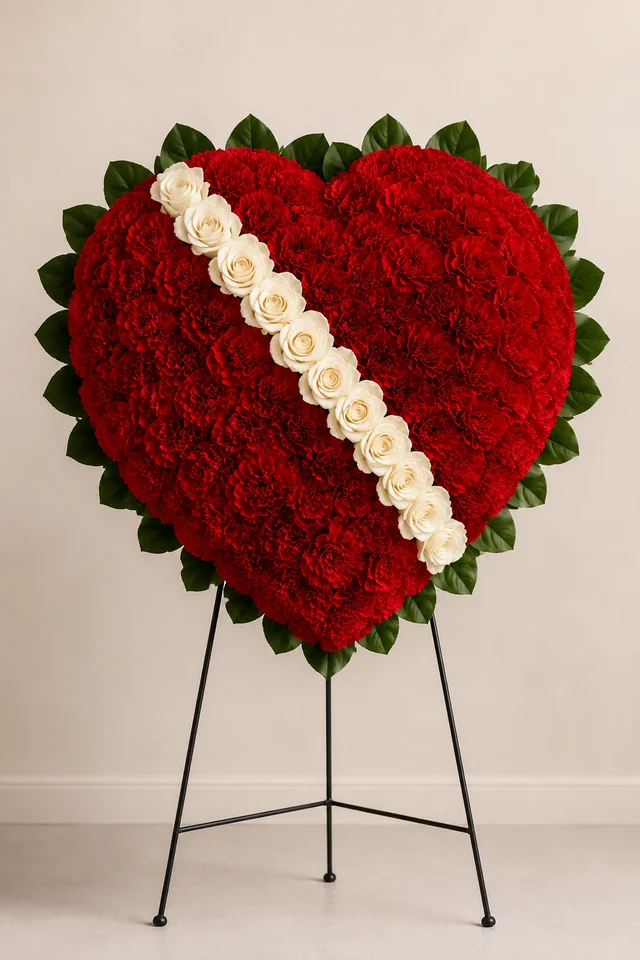
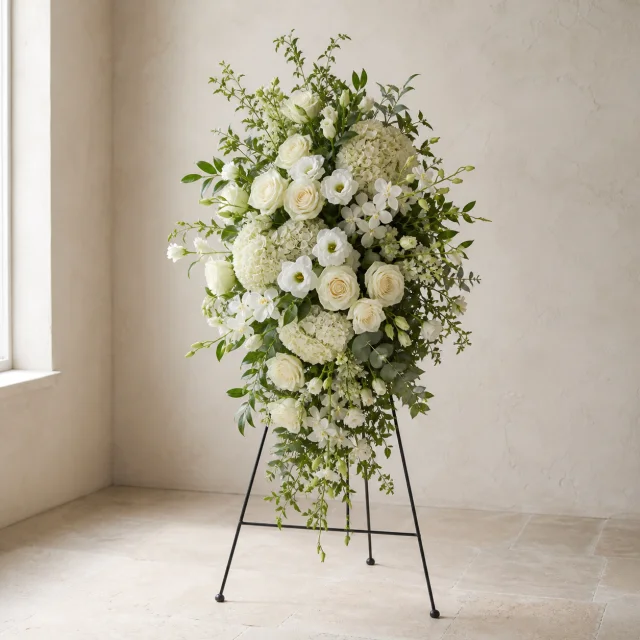
The card is a small note tucked into the flowers and later passed to the family. A ribbon or banner is lettered across a formal piece, most often a standing spray, wreath, or casket spray, and it is read from across the room. Keep the ribbon to one to four words and let the card hold the message and the names.
Not every design has room for a ribbon, and lettering is not automatically included. Ask the florist what is available for your arrangement and date. If several pieces are coming from the family, agree on the ribbons so they do not repeat each other.
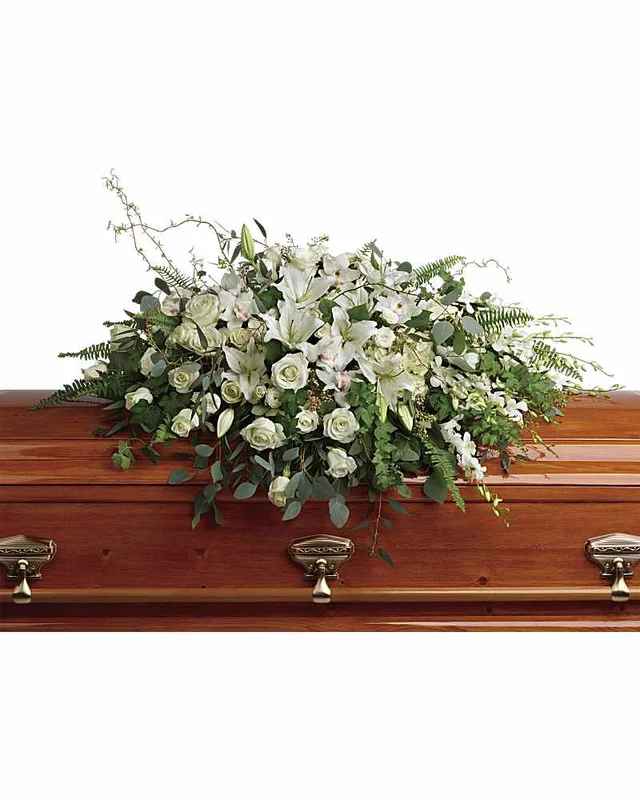
The casket spray is normally chosen by the surviving parent or by the children together. The Emily Post Institute notes that family members, including children and grandchildren, may supply the spray for the casket lid. The people arranging the funeral make the final decision. When you order, give the florist your parent’s full name as it appears on the service notice, the venue address, and the first viewing or service time.
- Beloved Mother
- Dad
- Our Mom
- Loving Father
- Mom and Grandma
- Father and Grandfather
Faith-based messages for a mother or father
Use scripture only when it reflects your parent’s faith and the family’s. Some families, including many Jewish families, do not use funeral flowers at all, so ask before ordering. These verses are from the King James Version. Ruth 1:16 was spoken by Ruth to her mother-in-law, Naomi, which makes it a fitting choice for a daughter-in-law or son-in-law.
- “Her children arise up, and call her blessed.” Proverbs 31:28. We love you, Mom. [Names]
- “The just man walketh in his integrity: his children are blessed after him.” Proverbs 20:7. Thank you, Dad. [Your name]
- “I have fought a good fight, I have finished my course, I have kept the faith.” 2 Timothy 4:7. Rest now, Mom. [Your name]
- “Thy people shall be my people.” Ruth 1:16. Thank you for making me your family. [Your name]
A simple formula: name, memory, love
When you are stuck, write three short pieces: what you called your parent, one thing they did that you will remember, and what you want to say to them now. Then sign it.
For example: “Dad, I finally fixed the porch step, the way you showed me. Love you. Chris.” It is short, it could only be about one father, and it sounds like a son talking.
What to leave off the card
Keep the cause of death, estate matters, and old family arguments off the card. On a shared card, include every sibling who contributed, or sign simply “Your children,” so no one feels left out.
If you are a friend writing to someone who has lost a parent, Lizzie Post’s condolence guide for AARP suggests avoiding lines such as “You’re the head of the family now” and “At least it’s over now.” A simple “I’m so sorry about your mom” with your full name is enough.
Before you submit, read the card aloud once and check the spelling of every name, including your parent’s.