Flower buying guide
Anniversary Flowers: Make the Choice Personal Without Guessing
Use a shared memory, your partner's current preferences, and specific card wording to choose an anniversary flower gift.
By Bloom Lane Flowers · Published
Options to compare
Formats to consider
Consider these formats only if flowers are welcome. Compare the selected size and palette, and confirm any essential ingredients, dimensions or receiving details before ordering.
Check the selected product, delivery ZIP and available date before ordering. Availability and timing require confirmation; a requested arrival time or occasion deadline is not guaranteed by an available delivery day.
Start with a detail your partner would recognize: a flower they enjoy, a place you remember together, or a moment you want to thank them for. Then choose an arrangement that fits their present preferences. An anniversary gift does not need to follow a year-by-year flower chart or recreate a wedding bouquet to feel personal.
The advantage of this occasion is the history you share. Use that history as material, not as a script your partner must still like. Someone who chose blush roses years ago may now prefer a different look—or may still love them. Their current taste is more useful than a rule about what a particular anniversary should receive.
Build a memory brief in three lines
Before shopping, write three short lines for yourself:
- The memory: What specific experience do I want the flowers to recall?
- The preference: What do I know my partner enjoys now?
- The connection: What can the arrangement honestly echo, without pretending to be an exact replica?
For example: “Our tiny outdoor ceremony. They still love loose rose arrangements. Choose a rose-focused shape that recalls that feeling, without promising the original varieties.” This is a workable brief because the connection is visual and personal, not an invented claim that one flower belongs to a certain year of marriage.
Another example: “Our first apartment, where they always kept colorful flowers by the window. They now enjoy a simpler display. Choose their current favorite rose color, and put the apartment memory in the card.” The flowers do not need to reproduce every detail of the memory. The message can carry the part that the design cannot.
Avoid a brief built on your preferences alone: “I want the same flowers because I remember them.” Ask whether your partner would enjoy the reference, particularly if the original occasion was complicated or stressful.
Two rose choices with different reasons behind them
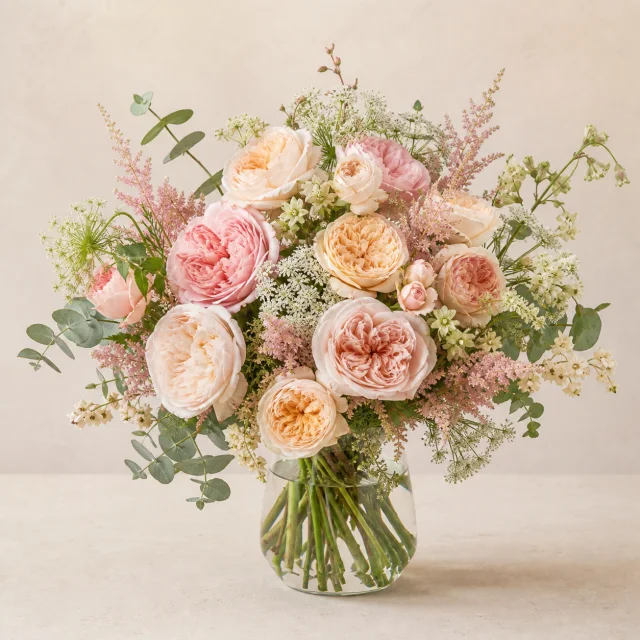
Blush Garden Roses is described in the catalog as blush and ivory garden roses with layered petals, seasonal texture, and a loose shape. It is a possible starting point when your partner enjoys that layered, textured style or when it recalls a shared event they remember fondly.
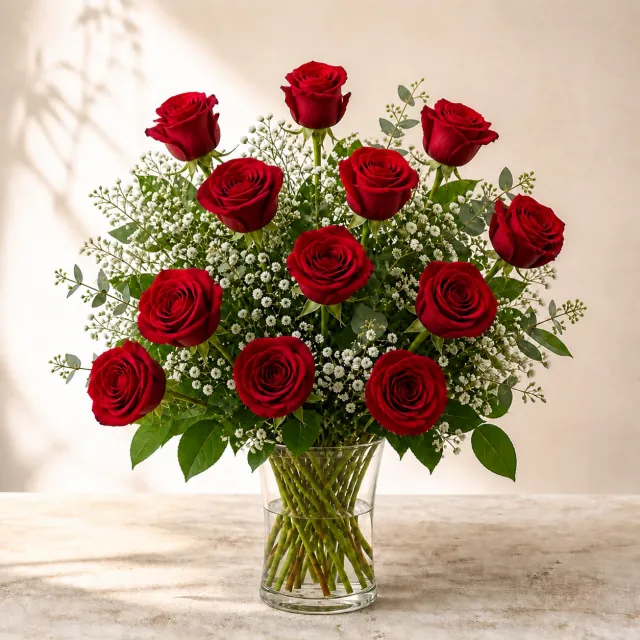
Classic Roses is described as roses in a clear glass vase, offered by stem count and color. It is a different starting point when the preference is roses themselves and a chosen color, rather than the garden-rose arrangement’s particular shape and texture.
These are alternatives based on presentation and taste. Blush does not universally mean gentleness, red does not prove passion, and a rose count does not measure the years or strength of your relationship. If you want to mark a number, explain its personal significance in the card rather than assuming the recipient will decode it.
If your partner does not like roses, neither product needs to be forced into the plan. Ask about another arrangement or choose another gift. Familiarity with the recipient should make the choice more flexible, not more attached to a conventional anniversary image.
Echo an old arrangement without promising a copy
If you have a photograph of meaningful flowers, decide which detail matters before showing it to the florist. Is it the loose outline, a pale palette, a flower you can identify, or simply the memory of the day?
A useful request is: “Could you suggest a design with a similar loose rose-focused feel? The photograph is inspiration, not a requirement to reproduce every stem.” If one particular ingredient is essential, say that clearly and ask whether it can be confirmed before ordering.
Do not treat a product photo, an old event photo, and an exact recipe as interchangeable. Catalog descriptions establish a starting style; they do not establish a replica service, identical varieties, or date-specific availability. If the essential detail cannot be confirmed, change the plan rather than buying an approximation and describing it as exact.
Make the card about your shared life
A useful anniversary message combines one memory, one present appreciation, and perhaps something you look forward to. It can be short without sounding generic.
For a partner who enjoys recalling the beginning:
“I still remember the long walk home after our first dinner, when neither of us wanted the conversation to end. I love that we are still finding things to tell each other. Happy anniversary.”
For an anniversary after a demanding year:
“This year hasn’t been easy, and I’m grateful for the way we’ve kept making room for each other. Thank you for the small check-ins, the late cups of tea, and the honest conversations. I love you.”
For a quieter shared routine:
“For our Sunday errands, the recipes we keep changing, and the jokes no one else understands. I wouldn’t trade this ordinary life with you. Happy anniversary.”
Use only details that are true for you. Do not turn the card into a public account of private difficulties, or claim that flowers resolve something still needing a conversation.
Let the gift fit the celebration
Think about when your partner will actually enjoy having the flowers: before an evening at home, after returning from a trip, or during an agreed visit. If you are planning dinner elsewhere, do not assume they want to carry a vase through the evening.
Confirm the relevant order date and receiving arrangements without promising an unconfirmed arrival time. You can preserve a surprise by saying, “I’d like to have something at home for our anniversary; which day would be easiest?”
Your final choice should be easy to explain in one honest sentence: “I chose these because…” If that sentence names your partner’s taste or a memory you both value, the gift already has more meaning than any universal anniversary rule could supply.