Flower buying guide
Valentine's Day Flowers: Choose a Gift Your Recipient Actually Wants
Choose a Valentine's gift by the recipient's taste, comfort with the gesture, and your actual relationship—not flower symbolism.
By Bloom Lane Flowers · Published
Options to compare
Formats to consider
Consider these formats only if flowers are welcome. Compare the selected size and palette, and confirm any essential ingredients, dimensions or receiving details before ordering.
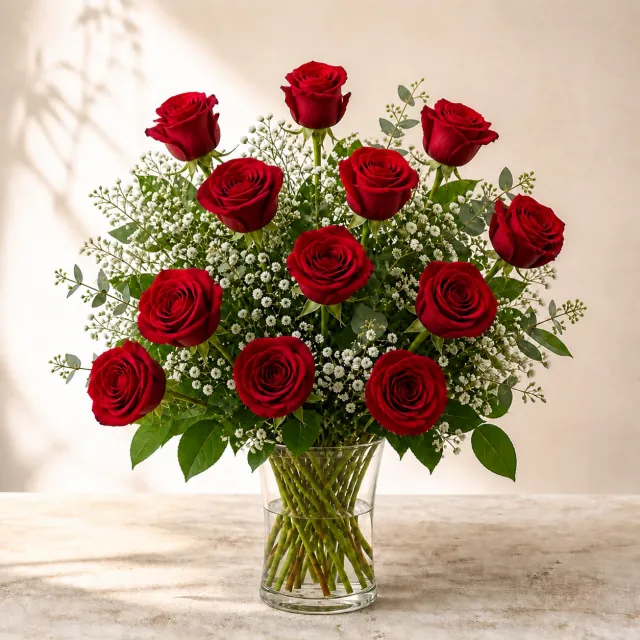
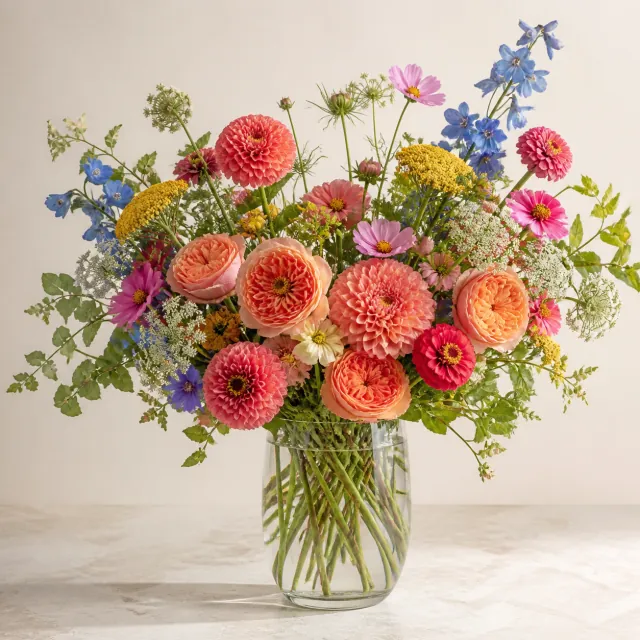
Check the selected product, delivery ZIP and available date before ordering. Availability and timing require confirmation; a requested arrival time or occasion deadline is not guaranteed by an available delivery day.
Choose Valentine’s Day flowers by what your recipient enjoys and how they want the occasion acknowledged. Roses can be a good choice for someone who likes roses; mixed flowers can be better for someone who prefers variety. Neither is a required declaration, and no color can explain your intentions as clearly as a thoughtful card.
The useful question is not “What is the most romantic bouquet?” It is “Would this person enjoy receiving this gift from me, in this way?” That includes romantic partners, a friend you celebrate with, and anyone else with whom you have an agreed Valentine’s tradition.
Three decisions that produce different gifts
They love a familiar classic
For a recipient who specifically enjoys roses, begin with Classic Roses. The catalog describes roses in a clear glass vase offered by stem count and color. Look at the selected option, not just a red-rose photograph; the image alone does not identify the option you are choosing.
A familiar choice can be personal when it reflects an expressed preference: “You always stop to look at roses, so that’s what I chose.” It does not need a claim that roses universally mean love or that a larger stem count proves a deeper commitment.
If your recipient likes a particular color, ask about that option for the intended order. Do not treat the catalog’s list of colors as confirmation of holiday availability. If the requested option cannot be confirmed, decide whether another choice would genuinely please them or whether a different gift is better.
They enjoy a less rose-focused display
For someone who likes varied flowers and a garden-style look, consider Gathered Garden, described as a mixed garden arrangement in a clear glass vase. The reason to choose it is their taste, not an attempt to send a less serious coded message.
A mixed arrangement is not automatically casual, and roses are not automatically a commitment announcement. If you are worried about how the gesture might be interpreted, resolve that through the relationship and your words rather than expecting the flowers to do it.
Someone might say, “I love flowers, but please no big Valentine’s display.” Take both parts seriously. A quieter, privately given gift may fit; no flowers may fit better if even a small display feels uncomfortable. Do not convert a request for restraint into a challenge to find the largest acceptable bouquet.
They prefer another kind of celebration
A person who dislikes Valentine’s gifts does not need a surprise bouquet to change their mind. Agree on dinner, a walk, a handwritten note, or an ordinary evening if that is what you both enjoy. The absence of flowers is not a failure of affection.
For a friend, ask whether exchanging something would be fun before creating an expectation. A nonromantic gesture should be welcome as such, not accompanied by a message designed to leave your intentions deliberately unclear.
Keep the occasion proportionate to the relationship
In a new relationship, you may know that flowers are welcome without knowing much about preferred styles. Ask a small, direct question: “Do you enjoy flowers for Valentine’s Day, or would you rather choose something together?” You can learn the preference without demanding a conversation about the future.
For an established partner, do not assume that last year’s plan still works. A changed work schedule, a trip, or a desire for a quieter occasion can change what feels enjoyable. Let the gift fit this year’s day rather than requiring the day to fit your surprise.
Public delivery deserves its own agreement. Someone can love flowers at home and dislike a workplace audience. Avoid using the gesture to announce a relationship, settle an argument, or prompt a public response. A gift should not require the recipient to perform gratitude in front of other people.
Write the meaning you intend
Choose wording that sounds like you and matches the relationship. These examples do not rely on any color code:
For a newer romantic relationship:
“I’ve loved getting to know you, especially our conversations that keep going long after the coffee is gone. Happy Valentine’s Day—I’m looking forward to Friday.”
For a partner who enjoys a playful note:
“For my favorite person to argue with about the movie and agree with about dessert. Can’t wait for our evening together.”
For an agreed friendship celebration:
“Happy Valentine’s Day, friend. Thanks for making our lunch dates a bright spot in my month. These are simply to celebrate you.”
Do not use a bouquet as the only apology after a disagreement. If you owe someone an apology, say what you are apologizing for and respect whether they want a gift at all.
Confirm the plan without promising the unconfirmed
Once you know what is welcome, agree on a place and day when the recipient can receive it. You can keep the design private while asking whether a home gift would be convenient. Then confirm the specific order’s timing with the florist; a general delivery message is not a Valentine’s Day arrival guarantee.
If an exact moment cannot be confirmed, do not promise flowers during lunch or before dinner. Make an agreed alternative plan. The most convincing Valentine’s gesture is not the one that follows a floral rule—it is the one that shows you listened.