Flower buying guide
Apology Flowers: What to Consider Before Sending a Gift
Decide whether apology flowers would be welcome, choose a proportionate gift, and write a card that takes responsibility without asking for forgiveness.
By Bloom Lane Flowers · Published
Look at the design and selected size before ordering. A gift can accompany an apology, but cannot replace accountability or require a response.
Jump to a section 5 sections
Apology flowers can accompany a sincere apology when the recipient welcomes them. They cannot fix wrongdoing, settle a disagreement, or buy forgiveness. Before choosing a bouquet, decide whether receiving a gift would feel considerate to the other person or create another thing they have to manage.
The best buying decision may be not to order. If flowers are welcome, choose something that reflects their taste, keep the scale proportionate, and let the card take responsibility without requesting anything in return.
First decide whether to send anything
Start with what the person has actually said. A request for space, no contact, or no gifts means do not send flowers. A delivery is still contact, even if someone else brings it. Do not use a florist, a friend, or a workplace address to get around a boundary.
If contact remains welcome but you are unsure about a gift, ask once, plainly: “Would flowers be welcome, or would you prefer no gift?” Accept the answer. Do not treat silence as permission or keep asking until you get a yes.
A bouquet is also the wrong starting point when there is a practical harm you need to address. Return what you borrowed, correct the mistake, or follow through on the agreed change first. Flowers should not take the place of that work.
Keep the delivery private and agreed
An unexpected office delivery can turn a private disagreement into a public event. Coworkers may ask questions, and the recipient may feel obliged to look pleased. Do not choose work because it makes the gesture harder to ignore.
Use a location and timing the recipient has agreed to. Knowing a home address from an earlier visit is not the same as permission to send a gift there now. If no suitable delivery arrangement is agreed, pause the order rather than create a surprise.
Avoid arranging a handoff that requires a conversation. The person should be able to receive the gift without meeting you, explaining themselves, or making a decision about the relationship.
Set the budget before choosing the size
There is no spending amount that makes an apology adequate. Set a budget you can comfortably afford, then choose within it. Do not stretch for a larger arrangement to demonstrate how sorry you are.
For the designs below, Classic, Signature and Grand are available options. Classic is the smallest listed option; Signature adds more flowers in the same colors, and Grand is the fullest arrangement. Compare the selected product image rather than assuming a size name gives you exact dimensions.
A larger gift can feel like pressure if it is out of step with how you normally give. Skip extras unless you already know they would be welcome. One considered arrangement is enough; repeated deliveries after no response can become unwanted contact.
Choose known preferences, not an apology symbol
No flower or color can communicate accountability on its own. Use a favorite flower, a familiar palette, or a style the recipient has previously enjoyed. If you do not know their preferences, asking is better than assigning a meaning to a bouquet.
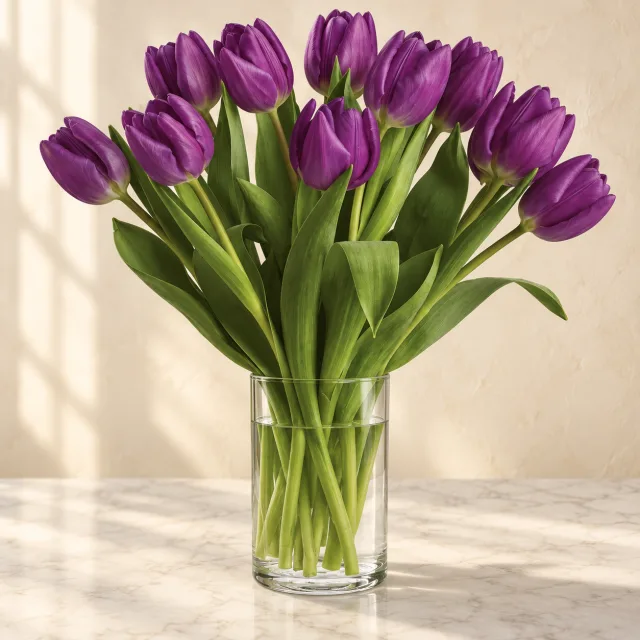
For someone who likes a simple purple arrangement: Violet Tulips gathers deep purple tulips with their leaves in a clear glass cylinder. Consider it because they like tulips or this look, not because purple promises forgiveness.
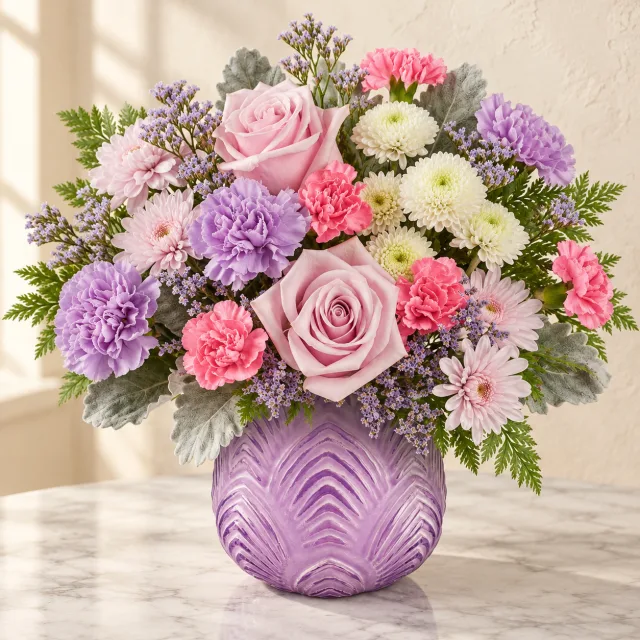
For someone who prefers soft mixed flowers: Daydream Bouquet combines light pink roses, lavender and pink carnations, white and pink cushion mums, and purple limonium in a sculpted lavender art-deco vase. It is a choice for an established preference, not a universal apology bouquet.
If the gift is for a friend or colleague, consider whether a romance-led design could send the wrong message. You do not need to choose either recommendation simply because it appears here.
Write the apology before ordering
Keep the card specific and short. Name what you did, acknowledge the impact, and state a concrete next step you intend to follow. Leave out excuses, requests for reassurance, and language suggesting the recipient now owes you a reply.
“I am sorry I shared something you told me privately. That broke your trust. I will not repeat it, and I will respect the space you asked for. No reply is needed.”
That wording is an example of accountability, not permission to send flowers after a request for space. In that situation, respect the boundary and do not order.
Avoid “sorry you were upset,” “please forgive me,” or “can we move on now?” A gift and card should leave the recipient free to decline, remain upset, or say nothing. Only browse and order once receiving flowers is genuinely welcome.
Compare the flowers in this guide
Designs to consider only if a gift is welcome
Choose by the recipient’s known taste, not by the size of the disagreement. Both designs offer Classic, Signature and Grand options; compare the selected design before ordering.
Check the selected product, delivery ZIP and available date before ordering. Availability and timing require confirmation; a requested arrival time or occasion deadline is not guaranteed by an available delivery day.
Look at the design and selected size before ordering. A gift can accompany an apology, but cannot replace accountability or require a response.