Flower buying guide
Birth Month Flowers: The Birthday Flower for Every Month
Find every month's traditional birth flowers and meanings, then choose a practical birthday bouquet with honest alternatives for seasonal or garden flowers.
By Bloom Lane Flowers · Published
Birthday designs behind the month examples
Month traditions do not guarantee a flower recipe. Make a Wish Cake is not edible and its candles are decorative.
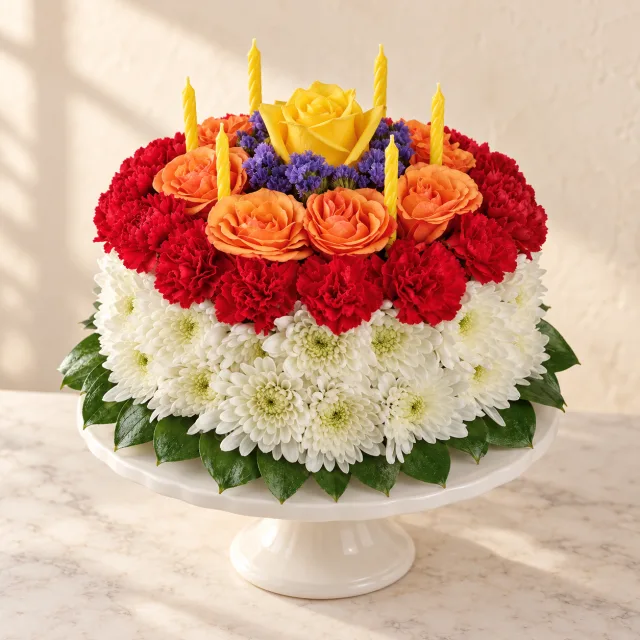 Make a Wish CakeFrom $120View product options
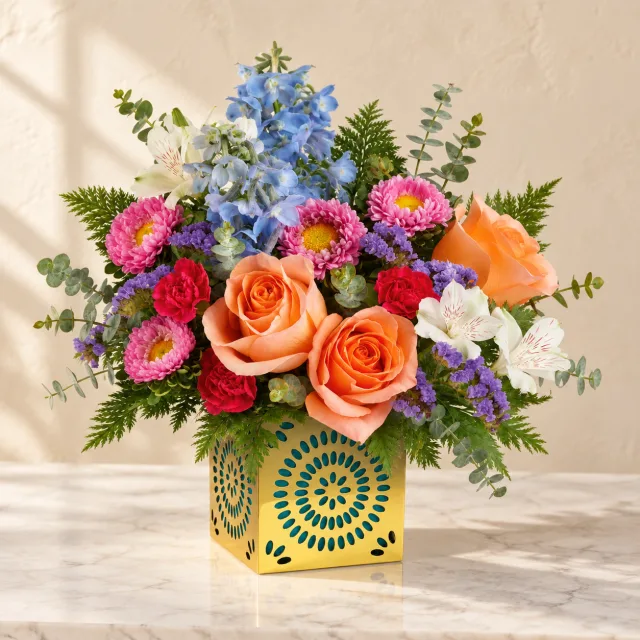 Best Day BouquetFrom $120View product options
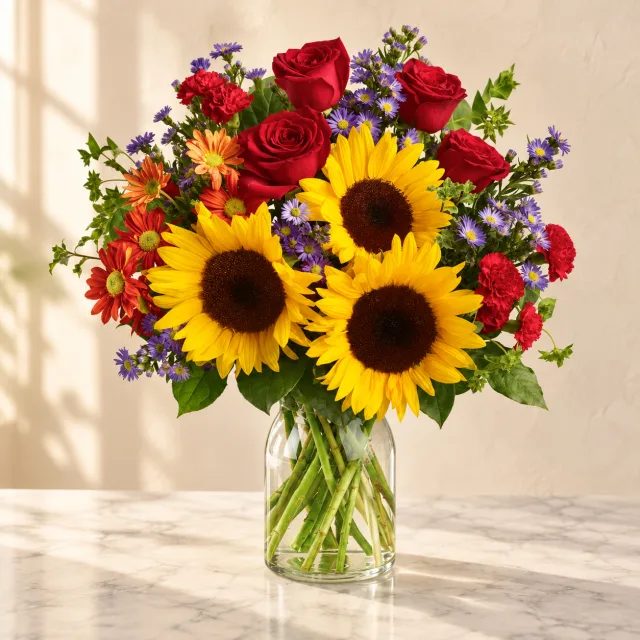 Sunflower Season BouquetFrom $120View product options
Birthday designs with a month connection: Make a Wish Cake includes carnations, roses and mums; Best Day includes roses, asters and delphinium, a related alternative for July rather than literal larkspur. Seasonal stems may vary. Compare this group.
Compare September's aster connection: These descriptions include asters alongside other flowers. Ask before ordering if asters are essential to your gift. Compare this group.
Check the selected product, delivery ZIP and available date before ordering. Availability and timing require confirmation; a requested arrival time or occasion deadline is not guaranteed by an available delivery day.
Jump to a section 9 sections
Birth month flowers are traditional flowers associated with the month someone was born. January has carnations and snowdrops; June has roses and honeysuckle; October has marigolds and cosmos. They can give a birthday gift a personal connection, but they are not a requirement, and not every birth flower is practical to send in a cut-flower arrangement.
Use the calendar as a starting point, then choose something the recipient actually likes. If their birth flower is unavailable, you can use a favorite color or a related floral shape and explain the connection honestly. Our guide to the best birthday flowers covers the broader choice of flower, color and size when the month is only one part of your decision.
Birth flowers by month: the twelve-month table
This table follows The Old Farmer’s Almanac’s birth-flower list. The meanings are paraphrases of its monthly symbolism summary, not a universal code or a description of the recipient’s personality. Lists vary by tradition and source; many months have two flowers rather than one mandatory choice.
| Birth month | Traditional flowers | Traditional themes, paraphrased from the Almanac |
|---|---|---|
| January | Carnation and snowdrop | Affection, being captivated by someone, and looking forward with hope |
| February | Violet and primrose | Humility, faithfulness, and a youthful outlook |
| March | Daffodil and jonquil | Starting again, renewal, and flourishing |
| April | Daisy and sweet pea | An innocent or unspoiled spirit, with appreciation and thanks |
| May | Lily of the valley and hawthorn | Happiness, gentleness, and hopeful expectations |
| June | Rose and honeysuckle | Love, heartfelt feeling, and affection |
| July | Larkspur and water lily | An optimistic, lighthearted spirit and purity |
| August | Gladiolus and poppy | Inner strength, remembering, and peace |
| September | Aster and morning glory | Patience and loving affection |
| October | Marigold and cosmos | Imagination, enthusiasm, and happiness |
| November | Chrysanthemum | Friendship, steadfastness, and sincerity |
| December | Narcissus and holly | Renewal, hope, and protection |
March’s jonquil is a type of daffodil, rather than a completely separate flower category. December’s narcissus tradition includes paperwhites. The shared plant-family language does not mean those two months call for the same delivered arrangement.
You can borrow one of these themes for the card without claiming the flowers secretly communicate it. “A little birthday brightness for your next chapter” works whether the gift contains the literal birth flower or not.
Which birth flowers work in a delivered bouquet?
A birth-flower chart is not an availability calendar. Carnations, roses, asters and chrysanthemums already appear in descriptions of Bloom Lane’s Birthday designs. Other entries are garden plants, flowering branches, aquatic plants, or flowers with a shorter seasonal buying window. A flower that grows in someone’s garden is not automatically available for their delivery ZIP and date.
There are three useful approaches:
- Choose a listed flower connection. Start with a design whose description includes the birth flower, then ask if that ingredient is essential.
- Choose a related visual alternative. Keep the color or upright shape, but do not rename the substitute as the original flower.
- Keep the tradition in the card. Send flowers they enjoy and mention the birth month as inspiration, not as an ingredient claim.
Seasonal stems may vary. A product description is a helpful starting point, not a guarantee that every listed stem will be supplied. If the whole reason for the order is one flower, confirm it before paying rather than placing that requirement only in the birthday message.
January through March: winter birthdays and a fresh start
January: carnation and snowdrop
Carnations give January an accessible connection within the Birthday line. Confetti Burst, Peach Fizz and Opal Garden list carnations; Make a Wish Cake and Smiley Mug do too. Choose the whole arrangement rather than assuming every carnation design has the same mood.
Snowdrops are a different proposition: a garden-flower association, not a listed Birthday ingredient. If their delicate white look is the part you like, ask about a softer palette instead. White flowers in a mixed bouquet should not be described as snowdrops unless they actually are.
February: violet and primrose
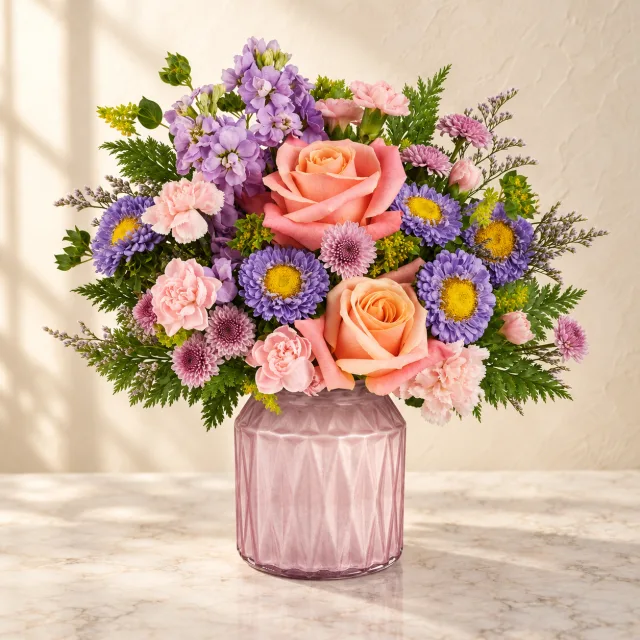
Violets and primroses do not appear in the Birthday descriptions. If the recipient loves the violet connection, a purple or lavender color direction can acknowledge it without pretending to contain violets. Opal Garden’s original palette includes lavender accents alongside peach and pink.
Do not substitute a living plant simply because a birth-flower name suggests one. A plant brings ongoing care. The birthday flowers-or-plant guide helps separate that responsibility from a temporary celebration.
March: daffodil and jonquil
Daffodils are associated with a fresh start in the Almanac’s summary. They are a seasonal cut-flower possibility to ask about, not a promised ingredient in the Birthday collection. If unavailable, yellow flowers can carry your cheerful intention without being a botanical match.
Sunflower Season offers yellow sunflowers with red roses and other accents. It is a warm mixed bouquet, not a daffodil substitute you should label “March birth flowers.” Let the card explain your choice instead.
April through June: garden traditions and roses
April: daisy and sweet pea
For April, first decide whether an exact daisy or sweet pea matters, or whether you simply want a light, garden-like feeling. Sweet peas can be a short-season request; confirm local availability rather than planning around the chart alone.
Daisy-form chrysanthemums appear in some Birthday designs, including Sunflower Season and Smiley Mug. They can provide a related visual direction, but daisy mums are chrysanthemums, not proof that a bouquet contains April’s traditional daisies. This is an easy distinction to keep honest in your note.
May: lily of the valley and hawthorn
May’s traditions point toward small bell-shaped flowers and flowering branches, not the large lily blooms shown in some mixed bouquets. Lily of the valley should not be confused with Asiatic lilies. Neither lily of the valley nor hawthorn is listed in the Birthday line.
Consider the softness you wanted: peach, pink and lavender in Opal Garden may suit that preference. If fragrance sensitivity or pets affect the decision, confirm the actual supplied flowers; a delicate-looking design is not a safety or fragrance claim.
June: rose and honeysuckle
June is straightforward if the recipient likes roses. Most Birthday flower designs list roses, with options ranging from warm sunflower mixes to softer garden directions. Pick their favorite palette rather than assuming a June birthday must receive red roses.
Honeysuckle is not listed as an ingredient in the Birthday collection. If that flower has a family memory attached, put the memory in the card and choose a rose-led design they will enjoy. You do not need both flowers to acknowledge the tradition.
July through September: upright flowers and asters
July: larkspur and water lily
July’s traditional flowers are larkspur and water lily. Best Day and Prism list blue delphinium. Delphinium is a close relative and a related alternative for the larkspur connection, not a promise of literal larkspur stems.
Water lilies are aquatic flowers rather than a routine ingredient in these delivered designs. For a July birthday, choose the delphinium connection only if the recipient likes the bouquet itself. If literal larkspur is essential, ask specifically and be prepared to choose another gift.
August: gladiolus and poppy
Gladiolus offers an upright floral shape; poppies bring a different, more open bloom form. Neither is listed in the Birthday designs, and availability needs a separate conversation. Do not assume August delivery guarantees either simply because they appear on a month chart.
For a tall, varied arrangement, you might compare Prism as a style alternative, not an August birth-flower bouquet. If their space is limited, start with our small-space flower guide before selecting a statement-sized gift.
September: aster and morning glory
Asters appear in Sunflower Season, Best Day and Opal Garden. That gives September several different directions: warm yellow and red, peach with bright accents, or a softer peach-pink-lavender palette. The calendar connection does not force one color scheme.
Morning glory is a garden-vine association, not a listed Birthday ingredient. If asters are the important detail, confirm them before ordering and say so directly. Do not expect a delivery note or card message to function as an ingredient reservation.
October through December: autumn color and winter choices
October: marigold and cosmos
October has both marigold and cosmos in the Almanac’s list. Neither is listed in the Birthday line. An autumn palette can be a practical alternative when warm color is more important than an exact flower.
Confetti Burst, Peach Fizz and Opal Garden offer original colors or the current seasonal palette. Their autumn directions use combinations of apricot, rust, burgundy and bronze. Check the selected option and whole design; this is October-inspired color, not a promise of marigolds or cosmos. Our palette guide explains that distinction.
November: chrysanthemum
November’s chrysanthemum connection includes the mums and button forms described in several Birthday arrangements. Make a Wish Cake, Sunflower Season and Smiley Mug provide different ways to use that connection.
The cake is a non-edible flower arrangement with decorative candles, not dessert. The mug is a keepsake container. Choose either only if that presentation fits the recipient; a month connection does not make an unwanted object more useful.
December: narcissus and holly
December’s narcissus and holly traditions are not listed Birthday ingredients. Ask about seasonal availability if literal stems matter. Avoid assuming a winter palette includes paperwhites, holly leaves or berries simply because it looks festive.
For someone who dislikes having their birthday folded into the holidays, choose their favorite colors and keep the note birthday-specific. A winter birthday does not obligate you to send red and green, and a favorite bright mix can be the more personal choice.
Make the connection clear in the card
Explain what you chose in ordinary language. If the arrangement actually contains a confirmed birth flower, name it. If you chose a color alternative, say that instead. These examples keep the distinction visible:
Happy birthday! I chose carnations for your January birthday and bright colors for your kitchen. Hope today includes something just for you.
Your October flowers inspired these autumn colors. Wishing you a birthday full of good company and time to enjoy it.
For more options, use our birthday card-message guide. Once the flowers arrive, the cut-flower care guide is a more useful next step than trying to decode every stem.
Questions about birth month flowers
What is the October birth flower?
The Old Farmer’s Almanac lists marigold as October’s primary birth flower and cosmos as its secondary flower. Neither is listed in Bloom Lane’s Birthday designs; an autumn palette is a color alternative, not an exact-flower claim.
Why do some months have two birth flowers?
Traditions and sources vary. The Almanac gives primary and secondary flowers for most months, offering more than one way to make the connection. You do not need to include both in a birthday gift.
Is delphinium the July birth flower?
The Almanac lists larkspur and water lily for July. Delphinium in Best Day and Prism is a closely related alternative to larkspur, not a literal larkspur guarantee.
Can I order an exact birth-flower bouquet?
Ask before ordering if one flower is essential. Availability depends on the flower, location and date, and seasonal stems may vary. A favorite-color arrangement with an honest card is a complete alternative.
Further reading
Compare the flowers in this guide
Birthday designs with a month connection
Make a Wish Cake includes carnations, roses and mums; Best Day includes roses, asters and delphinium, a related alternative for July rather than literal larkspur. Seasonal stems may vary.
Compare September's aster connection
These descriptions include asters alongside other flowers. Ask before ordering if asters are essential to your gift.
Check the selected product, delivery ZIP and available date before ordering. Availability and timing require confirmation; a requested arrival time or occasion deadline is not guaranteed by an available delivery day.
Compare the whole arrangement and selected palette, then confirm any essential birth flower and delivery availability.