

What is the best plant to send for sympathy?
There is no single best sympathy plant. The right one fits the recipient’s light, space, household, and energy for care after a death. Peace lilies, Phalaenopsis orchids, and planted dish gardens are traditional bereavement plants because they arrive looking finished and sit neatly on a table. A low-care green plant or a pot of rosemary can be just as meaningful when it suits the person who is grieving.
Check the notice first and follow any request for donations or no flowers. If you are torn between flowers and a plant, our comparison guide can help.
- Home with cats or dogs: a Phalaenopsis orchid or a parlor palm, both listed as non-toxic by the ASPCA.
- Traditional flowering plant for a home without pets: a peace lily.
- Someone who may forget to water: a snake plant, ZZ plant, or succulent garden.
- Sunny kitchen window: potted rosemary, a long-standing emblem of remembrance.
- Gardener with a yard: a shrub or perennial to plant in fall or early spring.
- Office or reception desk: a compact dish garden or a ZZ plant.
Peace lily: the traditional sympathy plant
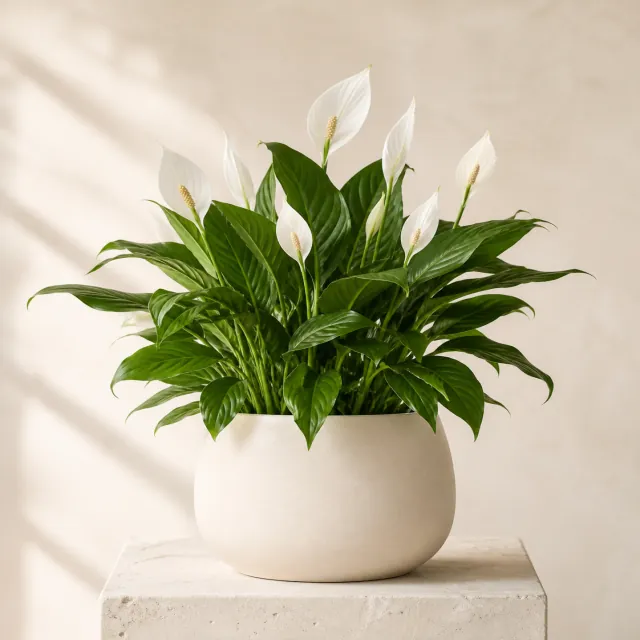
The peace lily has glossy dark leaves and white, sail-like blooms, and Clemson Cooperative Extension notes that it is one of the few foliage plants that will flower in low light. Despite the name, it is not a true lily: the ASPCA places it in the arum family (Araceae), while true lilies are Lilium species.
Care: Clemson says it tolerates low light but grows best in bright, indirect light; direct sun can scorch the leaves. Keep the soil moist but not soggy, letting it dry slightly between waterings. If it dries out too far, it wilts and the leaf edges can yellow. Most grow 1 to 4 feet tall and wide; keep them above 60°F.
Pets: The ASPCA lists the peace lily as toxic to dogs and cats. Its insoluble calcium oxalates can cause mouth irritation, drooling, vomiting, and difficulty swallowing if chewed. The ASPCA’s lily guidance says serious problems are very rare, but it is still a poor fit for a pet that chews leaves. Our Peace Lily can be sent through our local team or partner florists.
Phalaenopsis orchid: a long-blooming choice for homes with pets
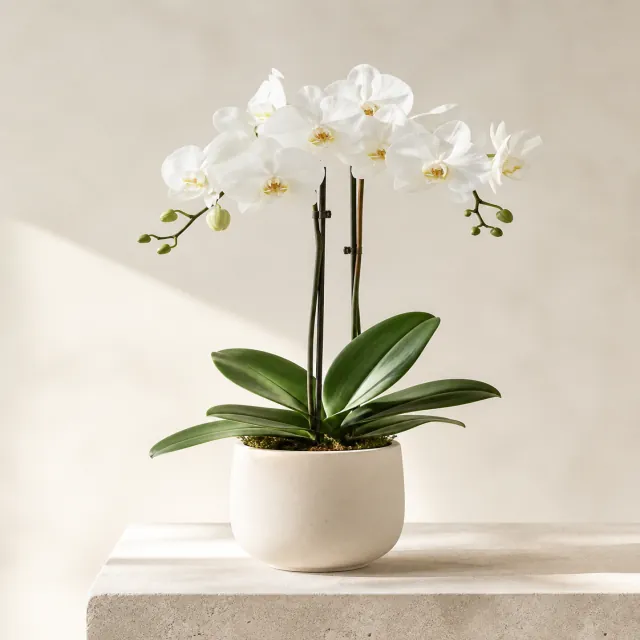
A moth orchid (Phalaenopsis) is a tidy, upright plant for a home, office, or care setting. Missouri Botanical Garden says its blooms can last two to six months, and the ASPCA lists Phalaenopsis orchids as non-toxic to dogs, cats, and horses, which makes it a sensible flowering plant for a home with pets.
Care: Give it bright, indirect light, such as an east windowsill. A mature plant in bark usually needs a thorough watering once a week; Missouri Botanical Garden recommends lukewarm water, not ice cubes. Many plants need cooler autumn nights, near 55°F, to bloom again. Plants range from a few inches to about 2 feet tall.
Bloom Lane’s Signature Orchid is a Phalaenopsis in a ceramic vessel, offered with one, two, or three stems in white, purple, blush pink, or butter yellow. It can be sent through our local team or partner florists.
Dish gardens and succulent gardens
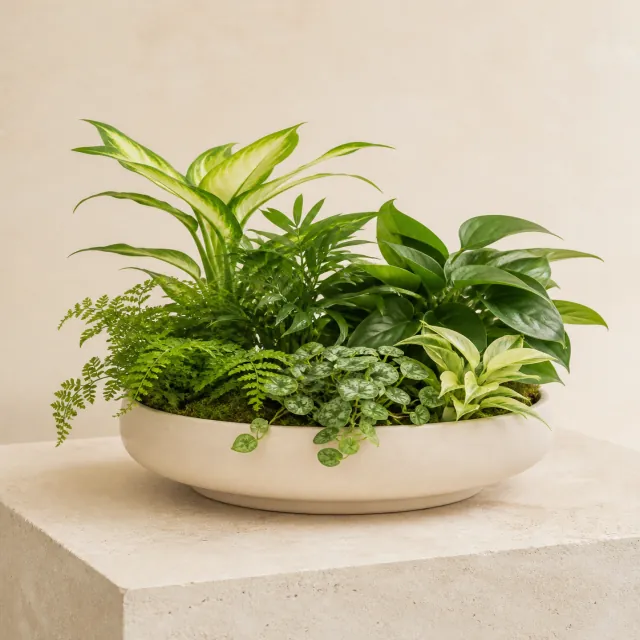
A dish garden groups several plants in one low container and suits a coffee table, desk, or memorial table. The University of Missouri Extension advises against mixing plants with widely different light, temperature, and moisture needs, and notes that a dish garden, unless it is the desert type, needs frequent watering. If the dish has no drainage hole, water lightly.
A succulent garden suits a bright, sunny window and someone who may forget to water. The University of Minnesota Extension advises letting the soil dry out completely between waterings and, in the low-light winter months, watering only enough to keep plants from shriveling. Size depends on the species; our Succulent Garden’s Classic size is designed for a desk or side table.
Pet safety depends on what is planted. The ASPCA lists echeveria and hens and chicks as non-toxic, but jade plant, snake plant, pencil cactus, and string of pearls as toxic, and a mixed dish garden may include pothos or other plants on its toxic lists. Ask for the name of every plant before sending one to a home with pets.
Our Dish Garden, Succulent Garden, and Quiet Grove Plant Garden (fern fronds and patterned leaves in a low terracotta-colored dish) can be sent through our local team or partner florists. Within our local delivery area, the Orchid & Succulent Garden Package pairs five white orchids with three succulents.
Low-care green plants: pothos, snake plant, and ZZ plant
UNH Extension includes all three among the easiest foliage houseplants to grow, which makes them good choices for someone who is overwhelmed or new to plants. All three appear in ASPCA toxic-plant listings, so they suit homes without pets that chew leaves.
Within our local delivery area, the Green Plant Collection groups a Money Tree, ZZ plant, and pothos in matching ceramic vessels; its five-plant size adds a snake plant and a Monstera. The ASPCA lists pothos and snake plant as toxic and names ZZ plant and Monstera among calcium oxalate plants, so the collection suits an office or a home without pets.
- Pothos: a trailing vine for a shelf or hanging pot. Medium light, such as an east or west window; keep the soil moderately moist. Vines can grow many feet long, and cuttings root easily in water, so family members can each keep a piece. The ASPCA lists golden pothos as toxic to dogs and cats.
- Snake plant: stiff, upright leaves for a floor or corner, up to about 3 feet tall. It grows in bright or low light; let the soil dry out before watering. The ASPCA lists it as toxic to dogs and cats.
- ZZ plant: glossy leaves on upright stems, slowly reaching 2 to 4 feet. It tolerates very low light, even fluorescent office light, and stores water in underground rhizomes, so let the soil dry between waterings. It has no separate entry in the ASPCA plant database, but an ASPCA houseplant article names it among plants containing insoluble calcium oxalates.
Rosemary: a plant for remembrance
Rosemary has long been linked with memory. The Australian War Memorial notes that it became an emblem of fidelity and remembrance in literature and folklore, and sprigs are worn on Anzac Day in Australia. Potted rosemary suits someone who cooks or has a sunny kitchen window.
It is not the easiest houseplant. The University of Illinois Extension says rosemary prefers full sun and soil kept on the dry side, and indoors in winter a cool, sunny spot with high humidity. Where it is hardy, in zone 8 and warmer, it can become a shrub 4 to 6 feet tall; farther north it is usually kept in a pot and brought indoors for winter. The ASPCA lists rosemary as non-toxic to dogs, cats, and horses.
Which sympathy plants are safe for cats and dogs?
If the household has pets, look up each plant in the ASPCA’s Toxic and Non-Toxic Plants database, ideally by scientific name, because common names overlap. Of the plants in this guide, the ASPCA lists Phalaenopsis orchids, rosemary, and parlor palm as non-toxic to dogs and cats, and peace lily, pothos, and snake plant as toxic. It also notes that eating any plant material may cause vomiting and stomach upset, so “non-toxic” does not mean “no problem.”
A parlor palm is a useful green option for a home with pets. UNH Extension describes it as suited to medium to low light, with soil kept moderately moist and watered once it begins to dry; it can reach 5 feet tall.
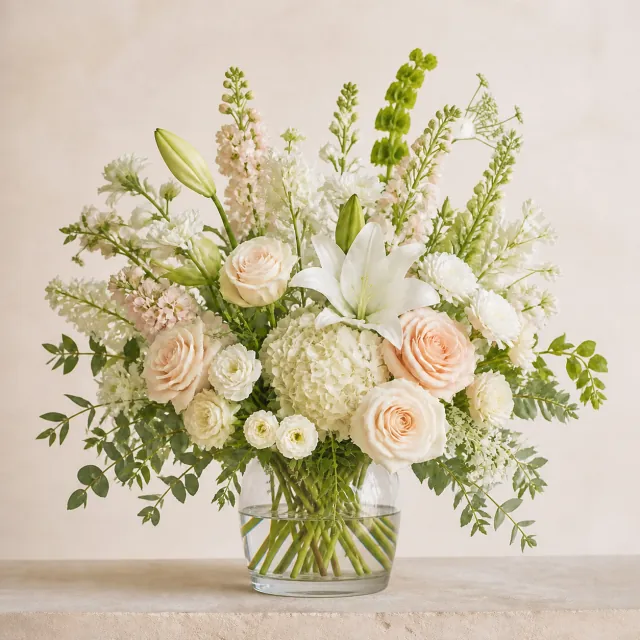
True lilies and daylilies are the bigger danger. The ASPCA warns that all parts of Lilium species are toxic to cats, that small amounts can cause severe kidney injury, and that daylilies (Hemerocallis) can also injure the kidneys. Drinking vase water or grooming pollen off fur may cause problems too. Lilies are common in fresh sympathy arrangements, including our Serene Bouquet, so for a home with a cat, choose a lily-free gift and confirm the complete flower list.
If you think a pet has eaten part of a plant, contact a veterinarian or the ASPCA Animal Poison Control Center at (888) 426-4435. The ASPCA notes that a consultation fee may apply.
Outdoor memorial plants for a garden
For a gardener with a yard, a shrub or perennial planted in memory can become a place to return to. Ask first: the recipient should own or control the land, want the plant, and be able to water it through its first season. A renter may prefer an indoor plant or an offer to help plant something later.
The University of Maryland Extension recommends choosing a plant suited to the site’s sunlight and a spot large enough for its full-grown size. It names fall, winter when the soil is not frozen, and early spring as the best times to plant trees and shrubs. Dig the hole no deeper than the root ball and at least twice as wide, and water regularly after planting.
Check pet safety outdoors too. The ASPCA database lists roses as non-toxic to dogs, cats, and horses, but lists hydrangea as toxic to all three. Do not plant anything at a grave or on shared ground without permission from the cemetery or property owner.
How to choose a plant for the recipient
An experienced gardener may enjoy coaxing an orchid into bloom again or planting a shrub. Someone overwhelmed by grief needs the most forgiving plant you can find, with care notes they can read at a glance.
In a small apartment, think windowsill or side table rather than floor. A Classic-size Dish Garden or Succulent Garden, each described for a desk or side table, or a single-stem Signature Orchid takes little room.
For a resident of assisted living or a nursing home, ask the facility about plant rules and whether staff or family can help with care. An orchid watered about once a week may be easier to manage than a plant that must stay evenly moist.
For an office, choose a plant that tolerates fluorescent light and irregular care, such as a ZZ plant, and decide who will water it over weekends and holidays. A plant for a grieving colleague’s desk should be small enough to carry home.
Sending a plant to the service or the family home
Most sympathy plants are gifts for the family home. Peace lilies and dish gardens are also familiar funeral plants because they sit neatly on a table and can go home with the family afterward, but ask the funeral home or venue first. Staff may not be able to keep a plant, and the family may not want to carry several home.
For a service delivery, include the deceased person’s full name and the service date. For a home delivery, confirm the address and that someone can bring the plant inside; Clemson advises keeping peace lilies above 60°F, so a plant should not wait on a cold porch.
What to write on a sympathy plant card
Keep the message to a line or two, focused on the person who died or the person receiving the plant. For example: “Thinking of you, and remembering how much Walter loved his garden.” Or: “A little green for your window, with love from the Parkers.” Sign with your full name so the family knows who sent it.
Because a plant has ongoing needs, add a short care note to the card or tuck a separate note in with the gift. Include:
- The plant’s common and scientific names.
- Light: where it grows best, such as near an east window.
- Water: how to tell when it needs water, and whether the container drains.
- Temperature: keep it away from cold drafts.
- Pets: its ASPCA listing, if the household has animals.
Further reading
- ASPCA: Toxic and Non-Toxic Plants database
- ASPCA Toxic and Non-Toxic Plants: Peace Lily
- ASPCA Toxic and Non-Toxic Plants: Phalaenopsis Orchid
- ASPCA Toxic and Non-Toxic Plants: Golden Pothos
- ASPCA Toxic and Non-Toxic Plants: Snake Plant
- ASPCA Toxic and Non-Toxic Plants: Rosemary
- ASPCA Toxic and Non-Toxic Plants: Parlor Palm
- ASPCA: Which Lilies Are Toxic to Pets?
- ASPCA: These Houseplants Can Cause Trouble for Your Pets
- ASPCA: Are Succulents Safe to Have Around Pets?
- Clemson Extension Home & Garden Information Center: Peace Lily
- Missouri Botanical Garden: Phalaenopsis
- North Carolina Extension Gardener Plant Toolbox: Phalaenopsis
- UNH Extension: Which foliage houseplants are easiest to grow?
- North Carolina Extension Gardener Plant Toolbox: Epipremnum aureum (Pothos)
- North Carolina Extension Gardener Plant Toolbox: Zamioculcas zamiifolia (ZZ Plant)
- University of Missouri Extension: Terrariums
- University of Minnesota Extension: Cacti and succulents
- University of Illinois Extension: Rosemary
- Australian War Memorial: Rosemary
- University of Maryland Extension: Planting a Tree or Shrub