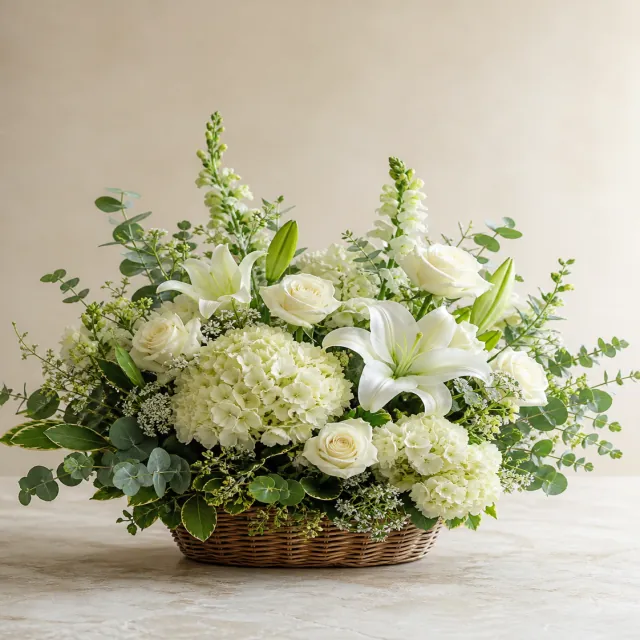

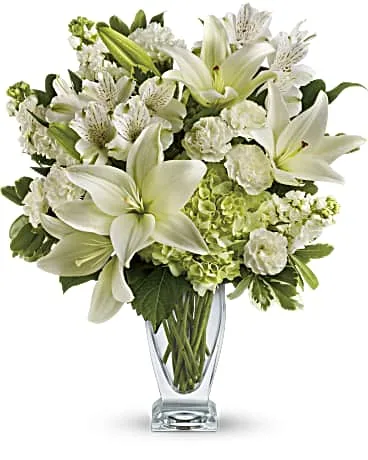
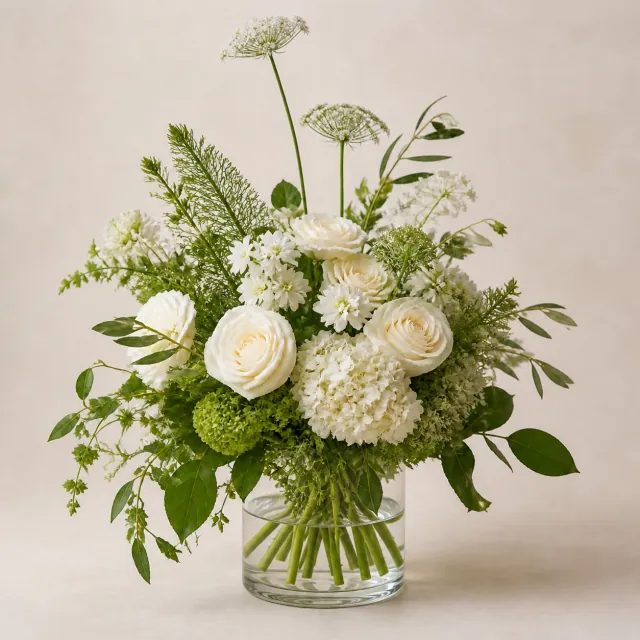
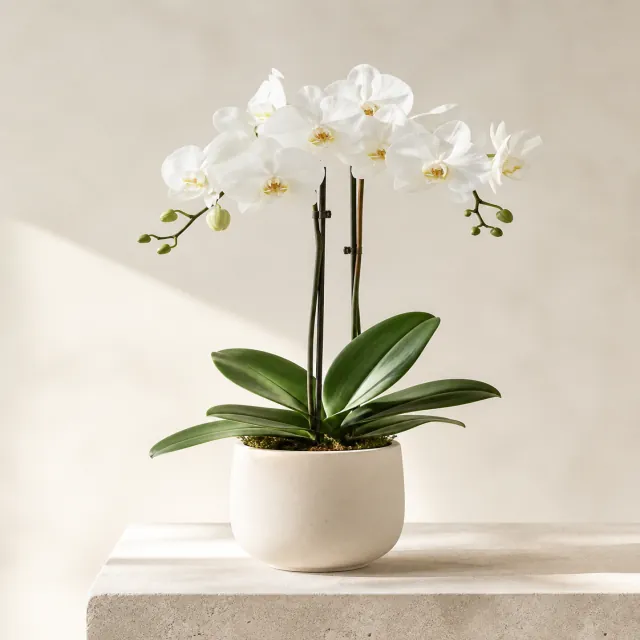


Can you send flowers to a Jewish funeral?
In most cases, no. The Rabbinical Assembly, the association of Conservative rabbis, says Jewish funerals avoid ostentation and that flowers and music are inappropriate. Its guide says friends who want to express condolences should be encouraged to give to a tzedakah fund that was important to the person who died or to the family.
A traditional service is deliberately plain. The same guide calls for burial in plain white shrouds to demonstrate the equality of all, a casket made entirely of wood, and no viewing of the body. My Jewish Learning notes that most rabbis discourage floral decorations at the funeral or on the casket. A standing spray, wreath, or casket piece has no customary place, and a cross or other symbol from another faith is never appropriate.
Why aren’t flowers part of a Jewish funeral?
Equality is one reason. Rabbi John Rosove’s funeral guide on ReformJudaism.org says the plain shroud and wooden casket emphasize the irrelevance of wealth and stature in death. Rather than spending on an expensive casket or a large display of flowers, it recommends saving that money for the living or giving it as tzedakah in the person’s memory.
Cost and custom also matter. My Jewish Learning points out that the Talmud does describe flowers at funerals, but most rabbis discourage floral displays on the grounds that the money is wasted, and they encourage donations instead. Rabbi Ari Enkin, writing for OU Torah, adds that most contemporary authorities regard flowers on a coffin as imitating non-Jewish custom.
Skipping flowers does not leave the family without comfort. Jewish tradition already gives friends well-worn ways to help: giving tzedakah, providing meals, visiting during shiva, and going to the cemetery for the burial.
Do all Jewish families follow the same custom?
No. A family may be more or less traditional than its synagogue, and an interfaith family may blend customs, so treat a denomination as a starting point and do not guess from a surname or a neighborhood. If the notice says “in lieu of flowers” or names a charity, follow it. If it says nothing, ask the rabbi, the funeral director, or a friend who is helping the family, rather than the mourners. A simple question works: “Would the family like flowers, or is there a charity or a meal I can help with?”
Published guidance also differs by movement and by country:
- Orthodox: do not send flowers. Rabbi Enkin’s OU Torah article calls flowers on a grave even more problematic than flowers on a coffin, though he cautions against objecting too strongly when others bring them.
- Conservative: the Rabbinical Assembly calls flowers inappropriate and points friends to tzedakah.
- Reform: Rabbi Rosove’s guide recommends tzedakah rather than spending on flowers and suggests that flowers a family receives be donated after the service, and ReformJudaism.org’s shiva guide says nothing but food is customary at a house of mourning.
- Israel: My Jewish Learning notes that flowers are common at funerals in Israel.
- Reconstructionist, secular, and interfaith families: practice varies, so follow the notice or a family contact.
How soon is a Jewish funeral?
Jewish law calls for burial as soon as possible. The Rabbinical Assembly says preferably within 24 hours of death, with delays for legal reasons, for relatives who must travel, or to avoid burial on Shabbat or another holy day. Rabbi Rosove notes that funeral homes can delay the burial so family can arrive or permits can be issued. A death notice may appear only hours before the service.
Services may be held in a synagogue, at a funeral home, or entirely at the graveside. Rabbi Rosove advises guests not to expect to greet the family before or after the service or at the burial; comfort comes later, at the shiva home. He also calls it a mitzvah, a sacred obligation, to go on to the cemetery and take part in the burial when you can.
Because of this pace, a rushed delivery is not what the family needs, and a synagogue or funeral chapel should not receive flowers unless the family or funeral director has asked for them. The customary gestures, such as a donation, a meal for the shiva home, or a note, can follow over the next days.
What is tzedakah, and how do you give it?
Tzedakah comes from the Hebrew word for justice or righteousness and refers to charitable giving. The Rabbinical Assembly, ReformJudaism.org, and My Jewish Learning all point friends toward a donation in the person’s memory, often to a charity named in the death notice, a cause the person cared about, or a synagogue.
Use the organization’s own donation page or instructions, and make the gift in memory of the person by full name. My Jewish Learning notes that charities will let the mourners know about your donation, so give the family’s mailing address or email if the form asks where to send the notice.
What to bring or send to a shiva house
Shiva, from the Hebrew word for seven, is the week of mourning that begins after the burial. ReformJudaism.org’s shiva guide says some families choose a shorter period and that shiva pauses for Shabbat. Asked whether visitors should bring a gift or flowers, it answers no: except for food, it is not customary to bring anything to a house of mourning.
Food is the traditional kindness. The first meal after the burial, the seudat havra’ah or meal of condolence, is provided by others. Rabbi Rosove suggests that relatives, synagogue members, or friends arrange it and says mourners should not arrange food or entertain guests. Friends may keep bringing food throughout the week. Ask the person coordinating what is needed and when, so deliveries do not pile up.
If the family keeps kosher, ask exactly what they accept, such as a particular certification or store, rather than guessing. ReformJudaism.org notes that the meal of condolence is often dairy in a kosher home, and Rabbi Rosove advises against pork, shellfish, or platters that mix meat and cheese. For an apartment, include the unit number and any building delivery instructions.
When you visit:
- Visit after the burial, during the hours in the notice, and not on Shabbat, from sundown Friday to sundown Saturday.
- Try the door before ringing the bell; traditionally, visitors simply enter.
- Let the mourner speak first. “I’m so sorry” is enough.
- Skip casual greetings; the Rabbinical Assembly notes that the usual greeting of shalom is not normally exchanged with mourners.
- Listen, share a memory if invited, and keep the visit short; about 30 minutes is plenty.
- You may join the shiva minyan, a brief prayer service usually held in the late afternoon or early evening.
Why do Jews put stones on graves instead of flowers?
When visiting a Jewish grave, it is customary to place a small stone on the headstone rather than leave flowers. My Jewish Learning says the stone shows that someone has visited. It may echo the biblical practice of marking a grave with a pile of stones, or a later habit of weighing down notes left at a grave; the origin is uncertain.
Rabbi Enkin’s OU Torah article calls the stone the Jewish way of showing honor to the dead at the grave and traces piling stones on graves to biblical times. He considers flowers on a grave more problematic than flowers at a funeral, partly because all the dead should be treated equally. Choose a small stone, set it on top of the headstone, and follow any cemetery rules.
Can you bring flowers to an unveiling?
An unveiling is the dedication of the headstone. The Rabbinical Assembly says no formal rite is required; if a service is held, it may be any time after the first month and is often close to the first yahrzeit, the anniversary of the death. My Jewish Learning notes that in Israel the stone is usually placed soon after the first 30 days of mourning.
The ceremony is brief. My Jewish Learning lists psalms, a short eulogy, removing the cloth that covers the headstone, the El Maleh Rahamim memorial prayer, and the Mourner’s Kaddish. It adds that it is customary to place a small stone on the marker before leaving.
Traditional practice at the grave is a stone, not flowers. Bring a small stone unless the family has said flowers are welcome, and even then, ask what the cemetery allows. The Rabbinical Assembly also describes giving tzedakah on the yahrzeit, so a donation around the unveiling suits the occasion.
What to write in a Jewish sympathy card
Keep it short and personal. ReformJudaism.org’s shiva guide says a card or note is proper and comforting when you cannot visit. A specific memory of the person is welcome; shiva is a time for remembering.
A familiar Jewish wish is “May her memory be a blessing.” ReformJudaism.org explains that it is customary to add “may their memory be for a blessing” after the name of someone who has died. In Hebrew it is zichrona livracha for a woman, zichrono livracha for a man, and zichronam livracha in the plural or gender-neutral form, often abbreviated z”l in writing. The same page notes that “rest in peace” is not commonly used in Jewish contexts.
After a burial you may hear Ha-Makom y’nahem et’chem b’toch sha’ar av’lei Tzion viY’rushalayim, which Rabbi Rosove translates as “May God comfort you among all the mourners of Zion and Jerusalem.” His guide describes people saying it as the mourners walk between two rows of those present at the grave. Plain English is just as kind if Hebrew does not come naturally.
Short messages that fit most families:
- “I’m so sorry. We are thinking of you and your family.”
- “May her memory be a blessing.”
- “We made a donation to the library fund in David’s memory.”
- “I will always remember how he welcomed everyone to his table.”
What if you already sent flowers?
Sending flowers in good faith is an understandable mistake. If the order has not been delivered, contact the florist right away with the order number and ask whether it can be changed or stopped. Do not ask the family to deal with it.
If the flowers have arrived, let the funeral director handle them. Rabbi Rosove and My Jewish Learning both mention that flowers can be donated to a hospital or nursing home after the service. Then follow with a customary gesture: a donation, food for the shiva home, or a note.
Some families do welcome flowers. If a family tells you so, at the service or later at home, follow their instructions on what to send and where, and keep the design modest and free of religious symbols. For a home delivery, confirm the address and avoid Shabbat and Jewish holidays.
Further reading
- The Rabbinical Assembly: Guide to Jewish Funeral Practice
- Reform Judaism: Everything You Need to Know About the Jewish Custom of Shiva
- Reform Judaism: Preparing for a Jewish Funeral: A Guide
- Reform Judaism: What Is the Jewish Expression to Refer to Someone Who Has Died?
- My Jewish Learning: Questions and Answers About Jewish Funerals
- My Jewish Learning: The Tombstone, the Unveiling and Visiting the Grave
- OU Torah: Flowers on Coffins and Graves