Flower buying guide
Thank-You Flowers: A Personal Gift or a Group Gesture?
Decide whose thanks a flower gift represents, organize a voluntary group gesture, and write a note that names the help rather than the size of the gift.
By Bloom Lane Flowers · Published
Options to compare
Formats to consider
Consider these formats only if flowers are welcome. Compare the selected size and palette, and confirm any essential ingredients, dimensions or receiving details before ordering.
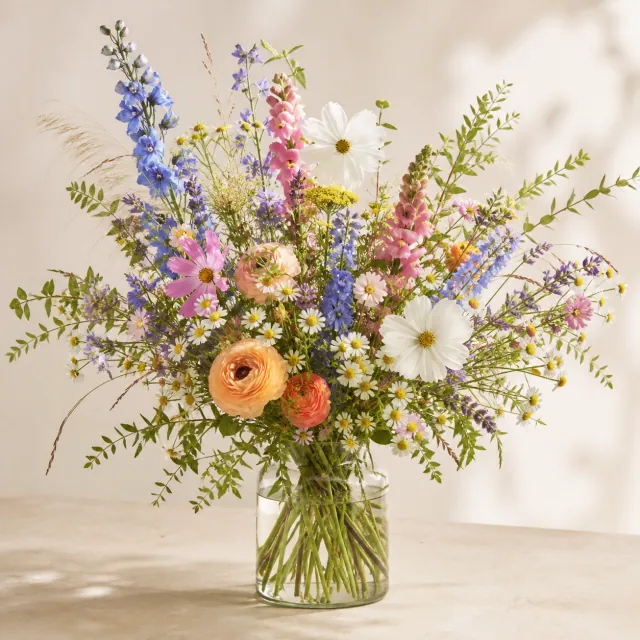
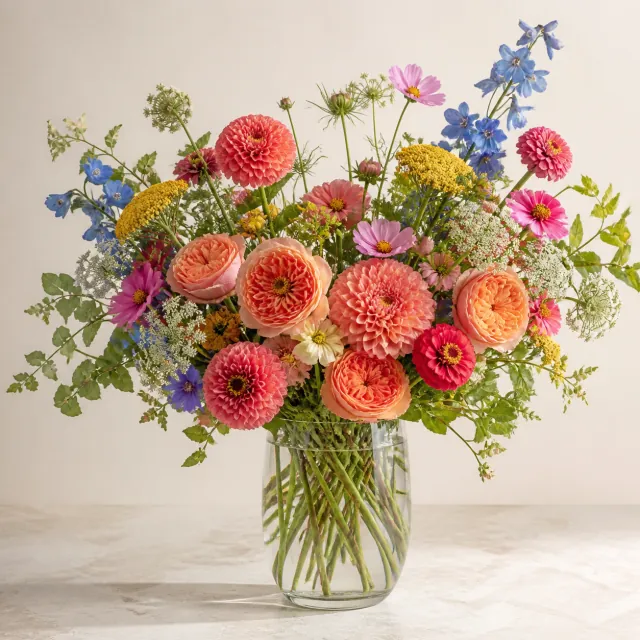
Check the selected product, delivery ZIP and available date before ordering. Availability and timing require confirmation; a requested arrival time or occasion deadline is not guaranteed by an available delivery day.
Send personal thank-you flowers when the help was personal or when you want to speak only for yourself. Organize a group gift when several people want to acknowledge the same contribution and agree to be represented together.
The difference is authorship, not simply the size of the arrangement. A large personal gift still comes from one person; a modest arrangement can carry sincere thanks from a whole group. Decide who is saying thank you before choosing the flowers.
Whose gratitude belongs on the card?
Suppose a friend helped you pack after a difficult move. Even if your family benefited, you can send flowers from yourself and describe what their help meant to you.
Now suppose a neighbor coordinated watering for several households during a shared trip. If those neighbors want to thank the organizer together, a group gesture can make sense. Do not sign everyone’s names simply because they benefited.
A third situation needs more care: someone helped a group, but only you want to send flowers. You can send a personal gift without presenting it as the group’s response:
Thank you for organizing the weekend. I especially appreciated how you made room for my late arrival. —Priya
That statement is accurate even if the rest of the group chooses another way to say thanks.
A simple group agreement
Before collecting money, send a small, clear proposal. Include the recipient, the reason for the gift, the intended spending limit, who will place the order, and when you need an answer.
For example:
I’d like to organize flowers for Ana to thank her for hosting our reunion. Participation is optional. If you’d like to join, please reply privately by Thursday. I’ll confirm the total before ordering and use only the names people approve for the card.
A private response gives people room to decline without explaining their finances. Do not announce contribution amounts on the gift note, assume equal contributions, or make participation a test of appreciation.
Choose one organizer to handle the order and one agreed final card message. Too many independent decisions can turn a straightforward thank-you into a prolonged negotiation.
If fewer people join than expected, revise the scope before spending. Do not order first and then assign everyone a share.
Match the form to the gesture
For a personal thank-you, think about something the recipient has actually told you. If they enjoy loose, mixed flower designs, Bloom Lane’s Wildflower Arrangement is described as an airy, meadow-style mix, with a clear glass vase depicted in the catalog imagery. Confirm the actual container before ordering. That describes its design direction; it does not establish the recipient’s taste or guarantee exact stems.
For a group thank-you, Gathered Garden is another mixed arrangement in a clear glass vase. Its catalog includes size and palette choices. Select an option because it suits the agreed gesture, not because a group gift must be the largest.
A vase arrangement provides a vessel, but the recipient still has to decide where it goes and look after it. If you know they do not want flowers, do not let the convenience of a group order override that preference. A shared card may communicate the same gratitude without adding an object.
Make the thank-you concrete
A useful note answers two questions: what did this person do, and why did it matter to you? Specificity gives the gift its meaning without turning gratitude into repayment. The examples below use illustrative names and situations; include only details that are true for your gift.
Personal thanks for practical help
Thank you for spending Saturday packing the kitchen with me, Daniel. Having you there made that part of the move feel manageable. I really appreciated your time. —Beth
A group thanking a host
Thank you for opening your home for our reunion, Ana. We loved having everyone around one table, and we appreciate the work you put into making it happen. With thanks from Priya, Leo, Sam, and Nora.
Two siblings thanking a family friend
Ruth, thank you for helping us sort the family photographs. Your stories gave names and memories to pictures we couldn’t place. We’re so glad we did it together. —Eli and Hannah
A personal note after a shared project
Thank you for walking me through the rehearsal, Chris. Your calm explanations helped me understand my part. This is a little thank-you from me. —Morgan
Avoid “We could never repay you” if you mean a simple, warm acknowledgment. There is no need to turn a generous act into an outstanding debt.
Keep the gift from creating another obligation
Do not attach a request for another favor to the thank-you card. Do not require a photograph of the arrangement or a public acknowledgment of the senders.
For a group gift, let the organizer answer any practical questions so the recipient does not have to manage several conversations. Once the flowers and message are chosen, the group can stop discussing how impressive the gesture looks.
The useful next step is to settle the sender list and the specific thanks. The arrangement supports that message; it does not need to speak for people who have not agreed to join.